Wednesday, April 5, 2017

Sunday, March 26, 2017
New Car!
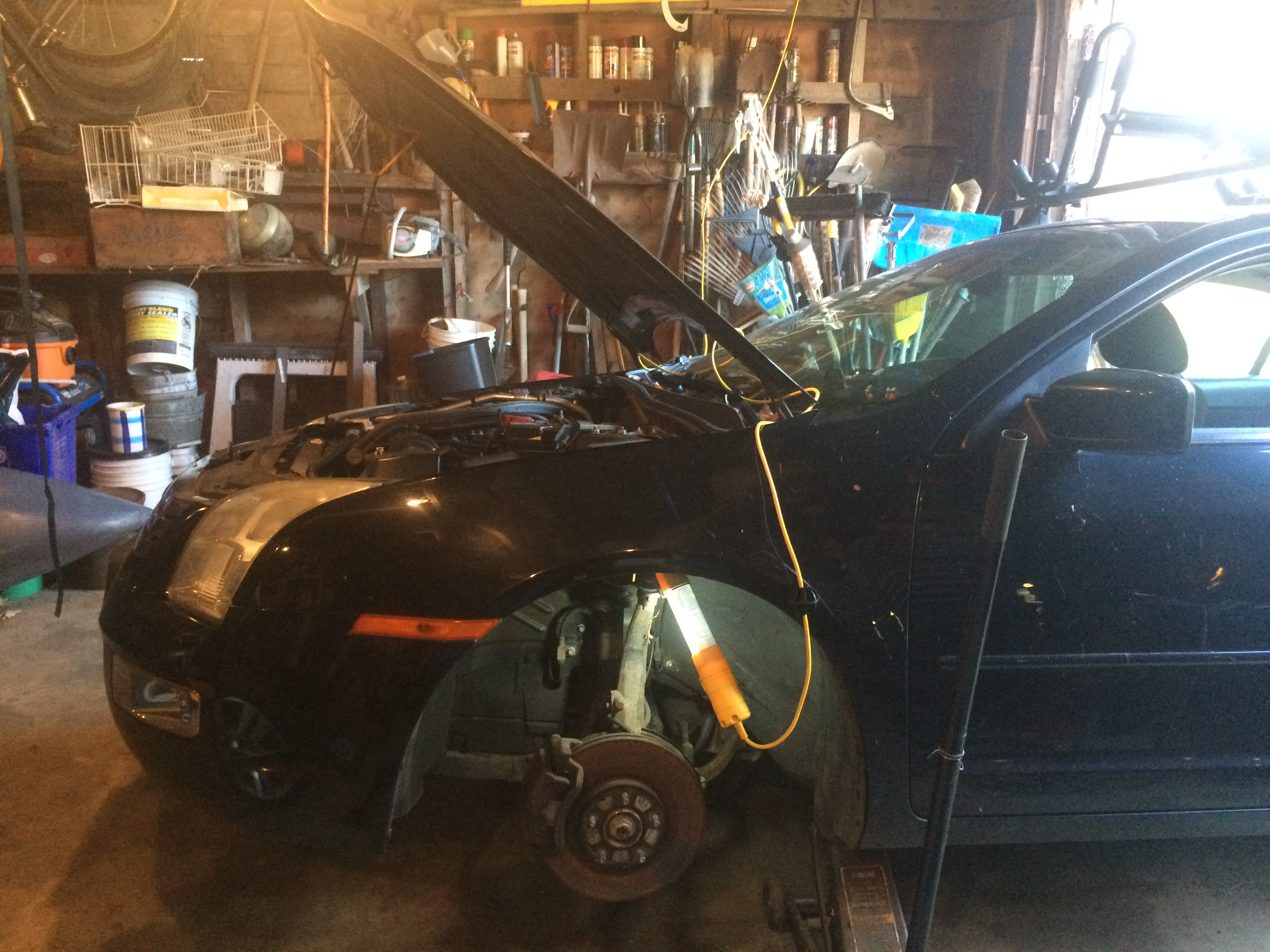
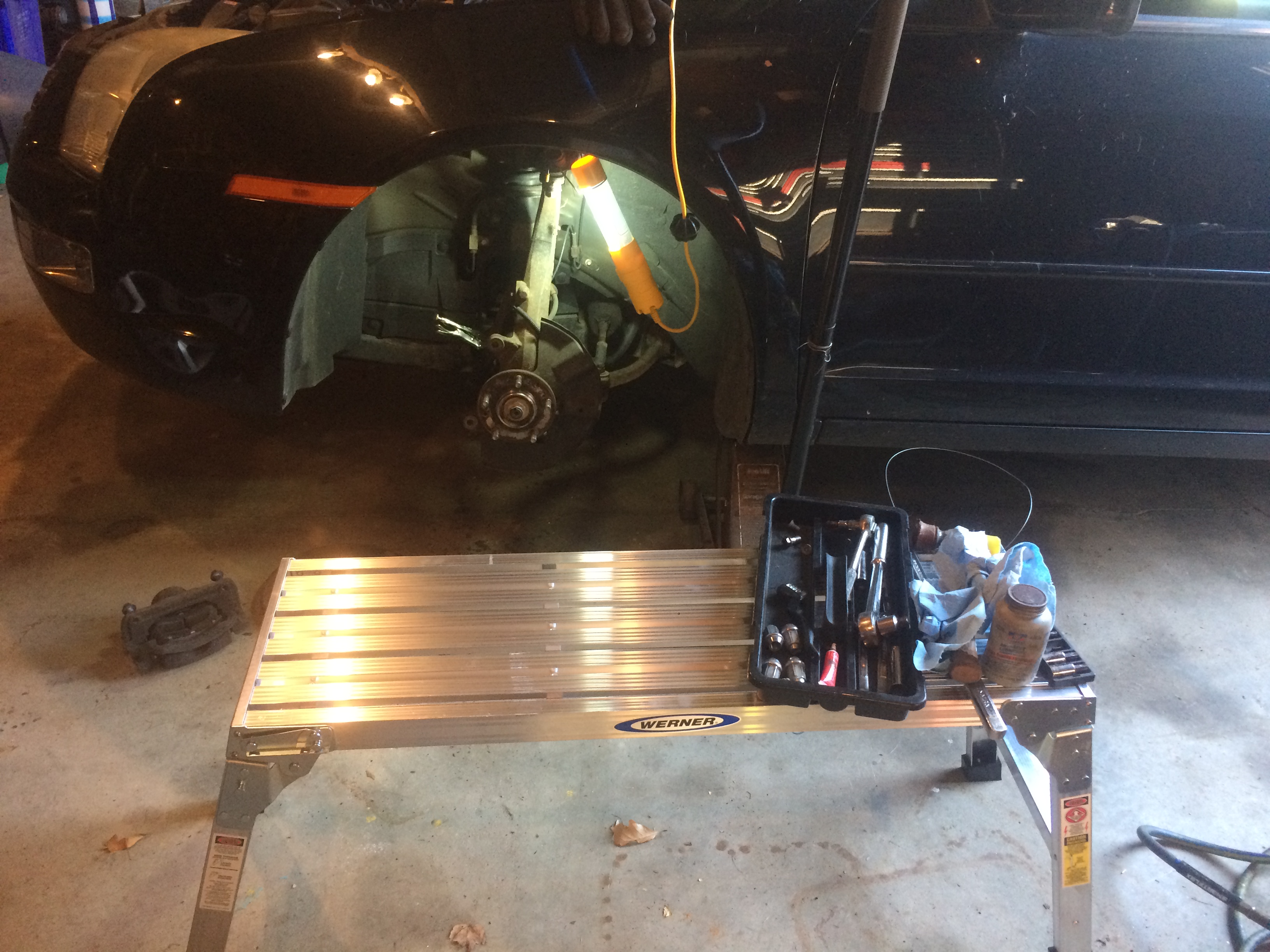
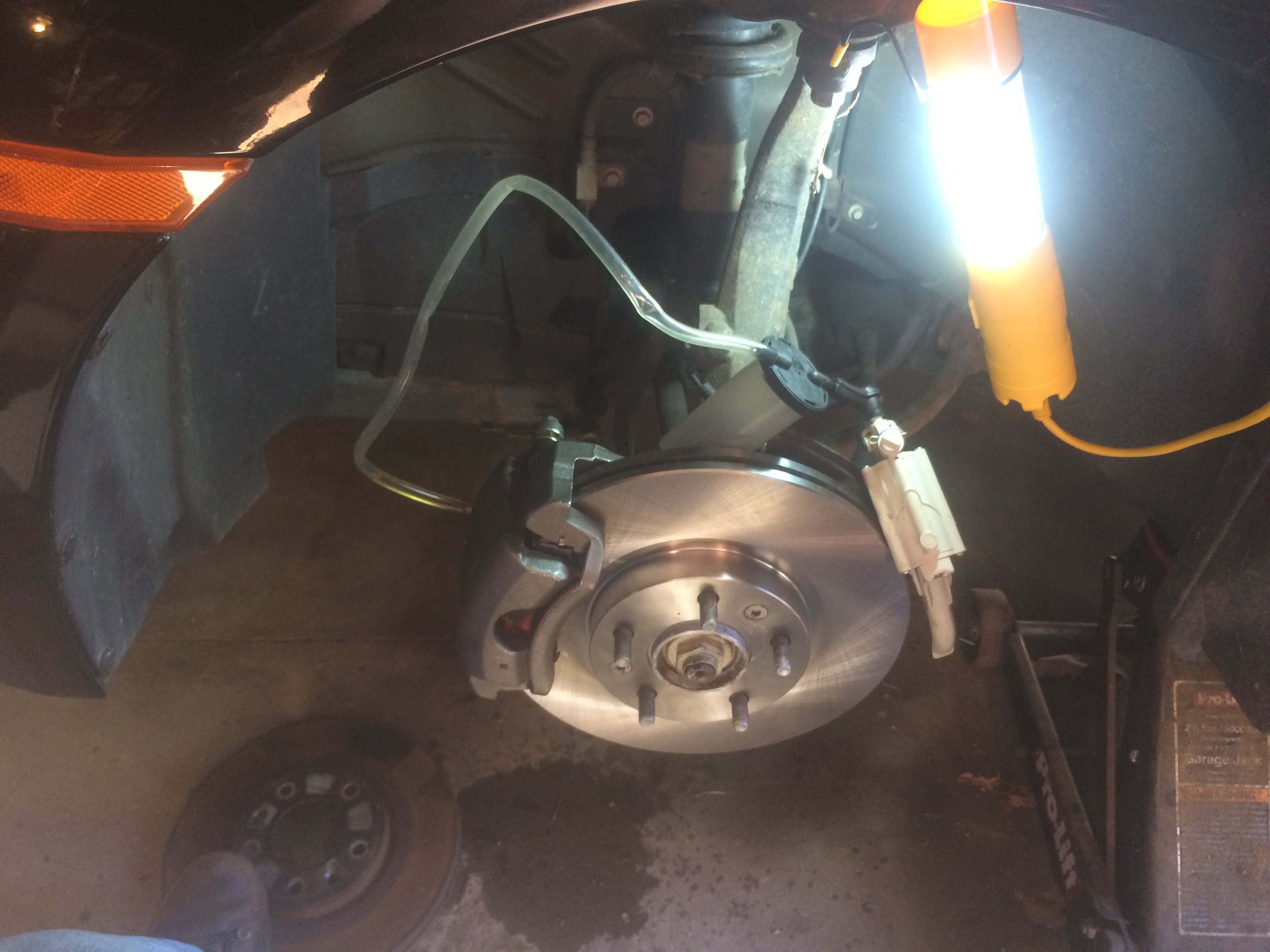
Put new brakes on in November...(and new tires in December :/)


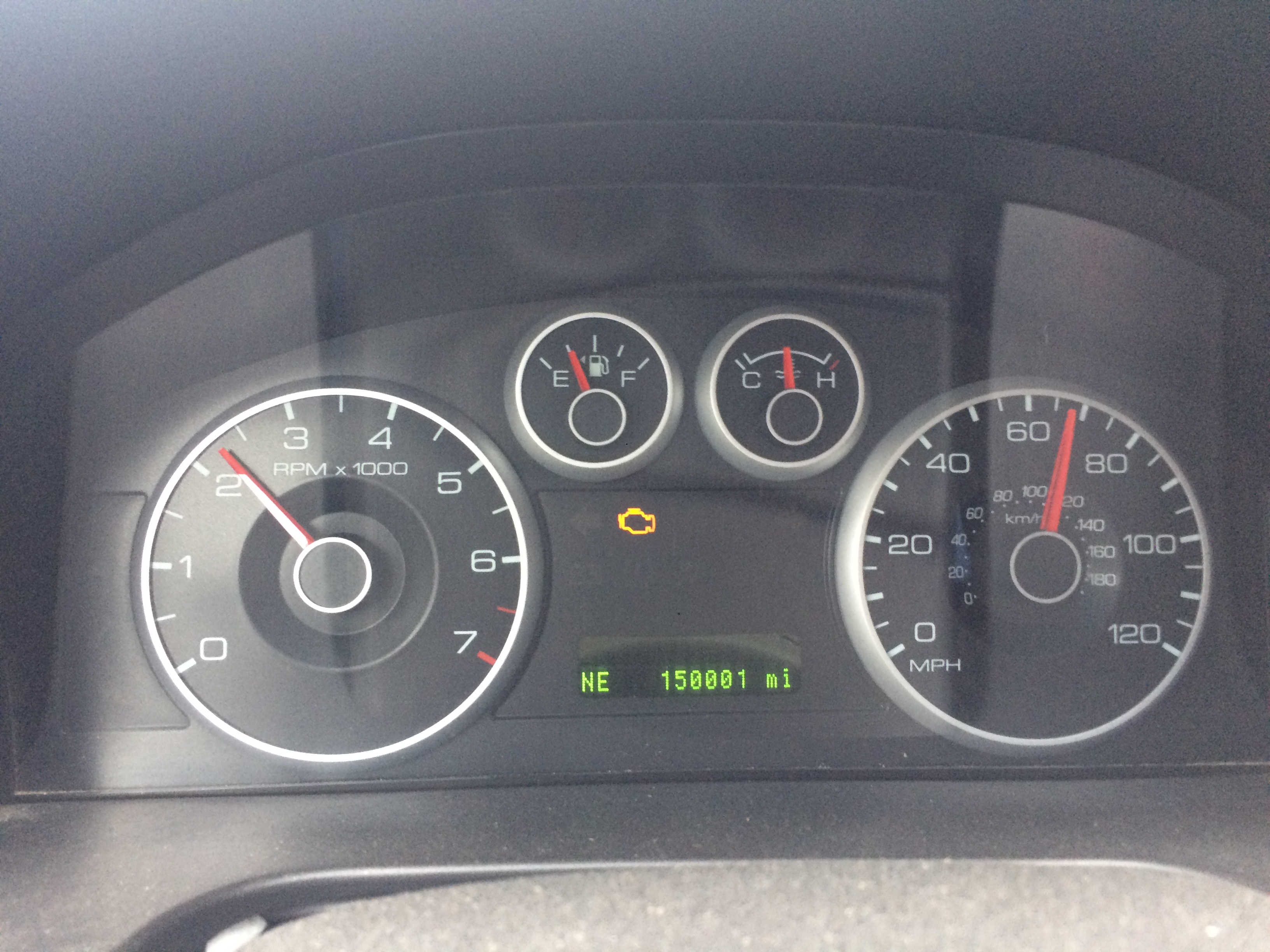
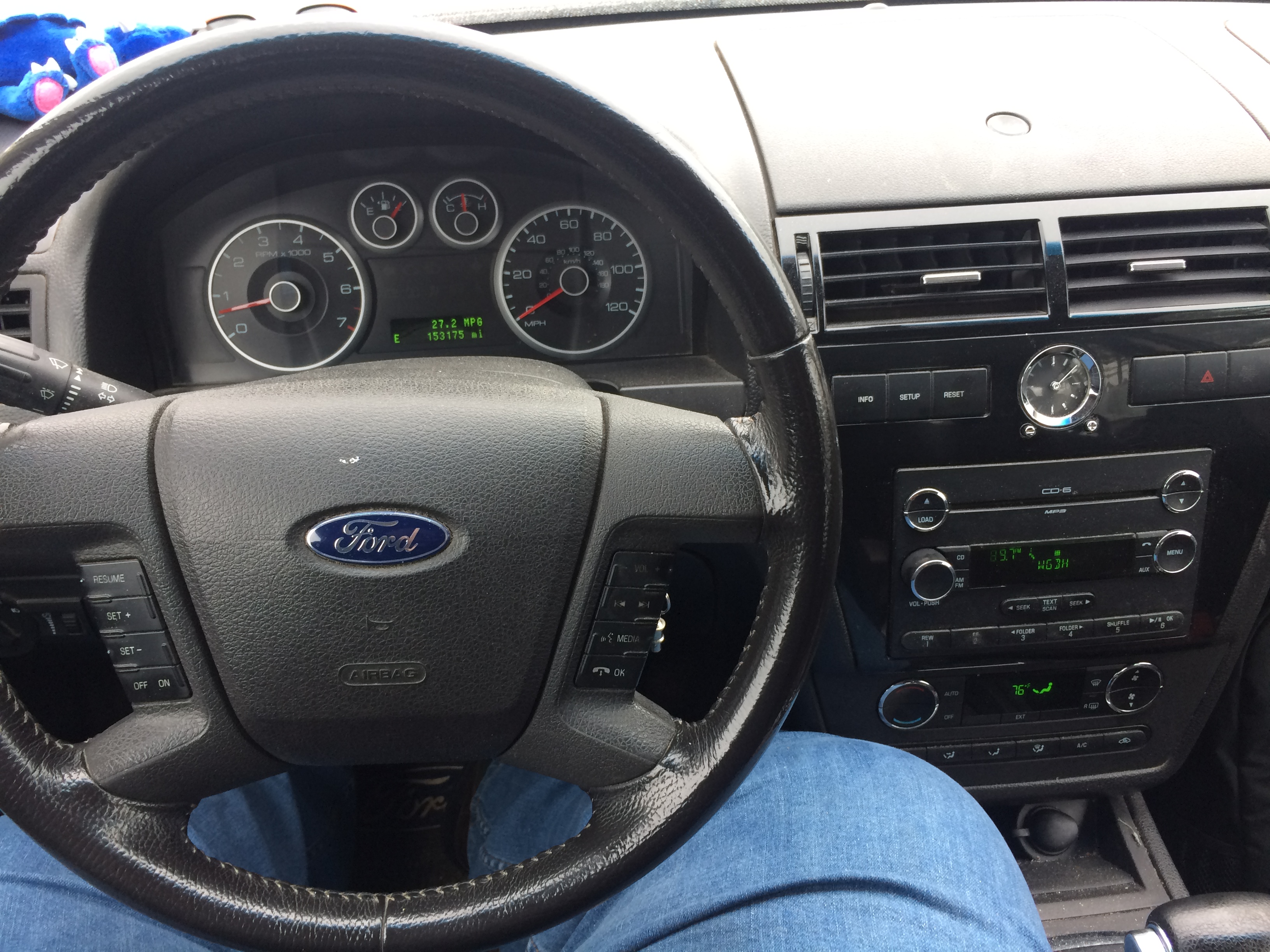
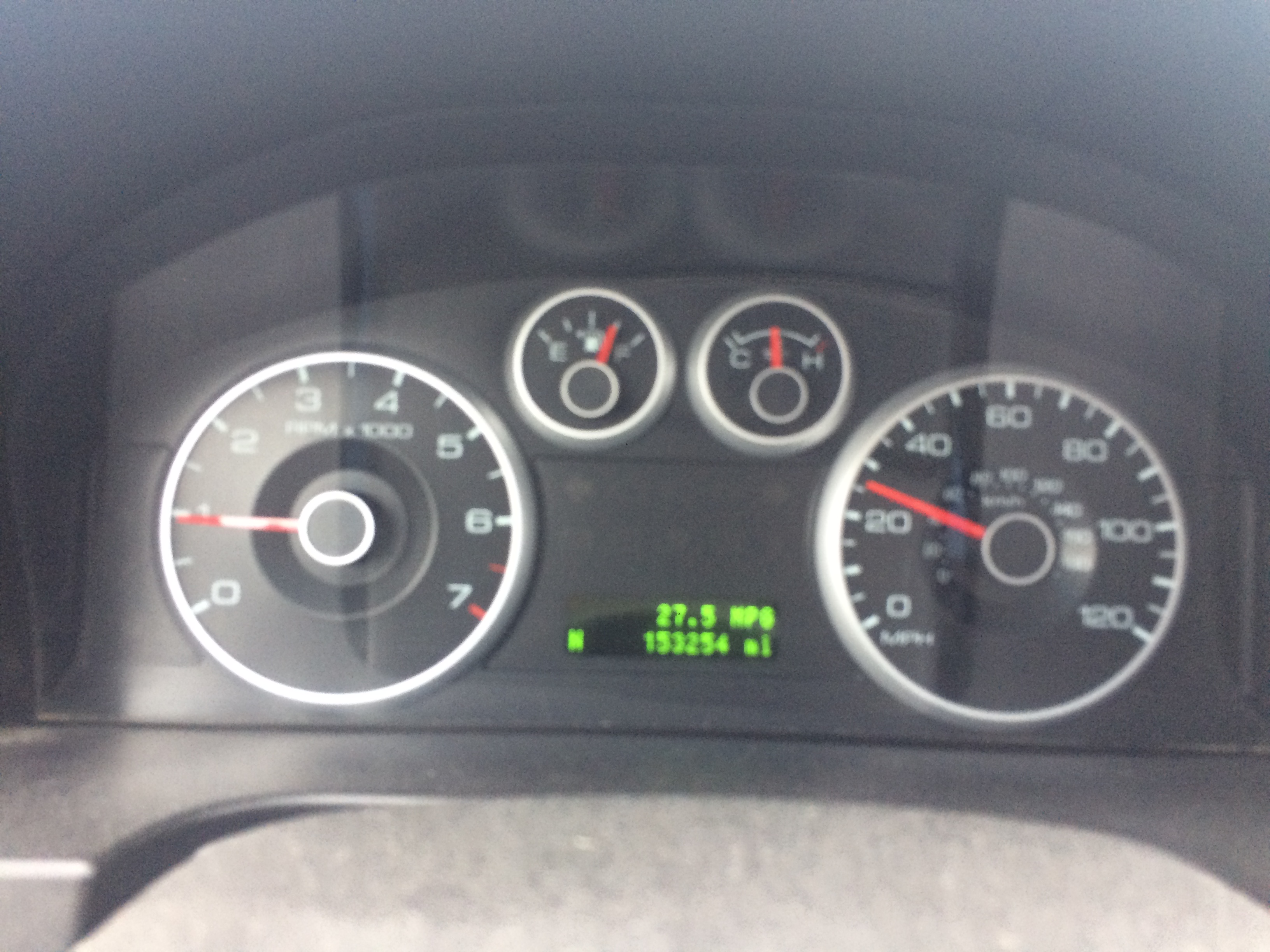
Hit 150,000 miles on January 21st!

...but in January realized I was low on Transmission fluid. In the five minutes I was parked checking it this puddle formed:

Since then I figured I was losing a quart of transmission fluid every three weeks. Since I had poor credit when I bought Olivia (a 2009 I bought in 2012), I was still paying high interest on a six year note...after five years, I guess the logical thing is for her to go. She looks so naked without the roof rack on for the first time in five years!

And a last, loving hand wash on the way to the dealership...
Let's see, of the pantheon of vehicles:
'78 Scout II had sentiment as the old family car, but one day I put on my seatbelt and the retractor pulled out of the rusted frame and landed on my lap o_O
The '82 Ranger got me around
As well as the '94 S-10 I bought new to replace the Ranger.
The '96 S-10 I bought a couple years later...that remains my favorite vehicle. That was just an awesome truck
But I traded it for a used '98 F-150 when it was high mileage and beginning to have issues (the hood cable broke the day I went to drive it to talk about the F-150! I was washing it and went to open the hood and felt it snap!)
The F-150 I never liked...too big, too small springs.
Saw a good price in Quincy, MA on a new '03 Ranger and bought that...I guess that one ranks third. But I rode it hard and put it away wet for everyone of it's 250,000+ miles.
Then came Olivia and I just loved this car
The '01 Ranger is also not bad, but just basic transport for my truck needs now.
We'll see were the new one fits.

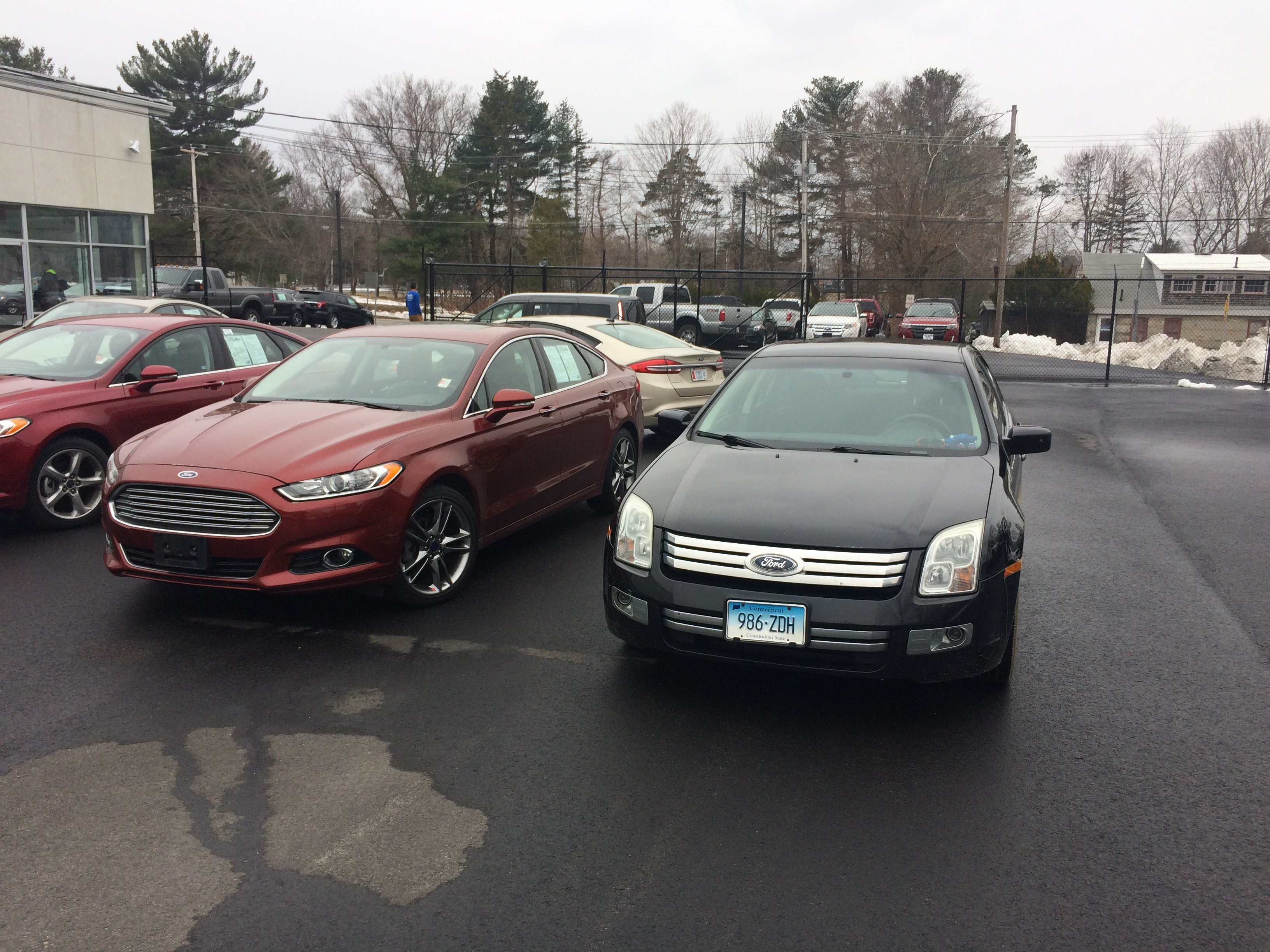
Actually went to look at the slightly redder '16 Fusion SE in the background (which was fresh from the Auction lot...and sure looked rough for the 4,000 miles on the odometer...), and slightly lower amenities then Olivia (manual rear view mirror? Mon dieux!). Then there was a beige '16 Fusion on the showroom floor that had a sunroof -- unlike the 2009 Fusions which I didn't have enough head room when they had sunroofs, I actually fit in the redesign...but it was beige. But on their lot was a '14 Fusion Titanium...
Queen Olivia I next to Queen Olivia II. Prince Consort Oliver, the scoundrel dragon mascot, will move from one to the other.
20,000 miles, came off a lease in Maine, AWD which I didn't need but the interior is pretty loaded. Call it a baby Lincoln.

I'll be taking delivery on Wednesday :)


Funny bit of sentimentality, reviewing my post I suddenly remembered, with a tear in my eye, the day I was driving Oscar back from the vets after he got his diagnosis of cancer and this song came on the radio:
Hit 150,000 miles on January 21st!
...but in January realized I was low on Transmission fluid. In the five minutes I was parked checking it this puddle formed:
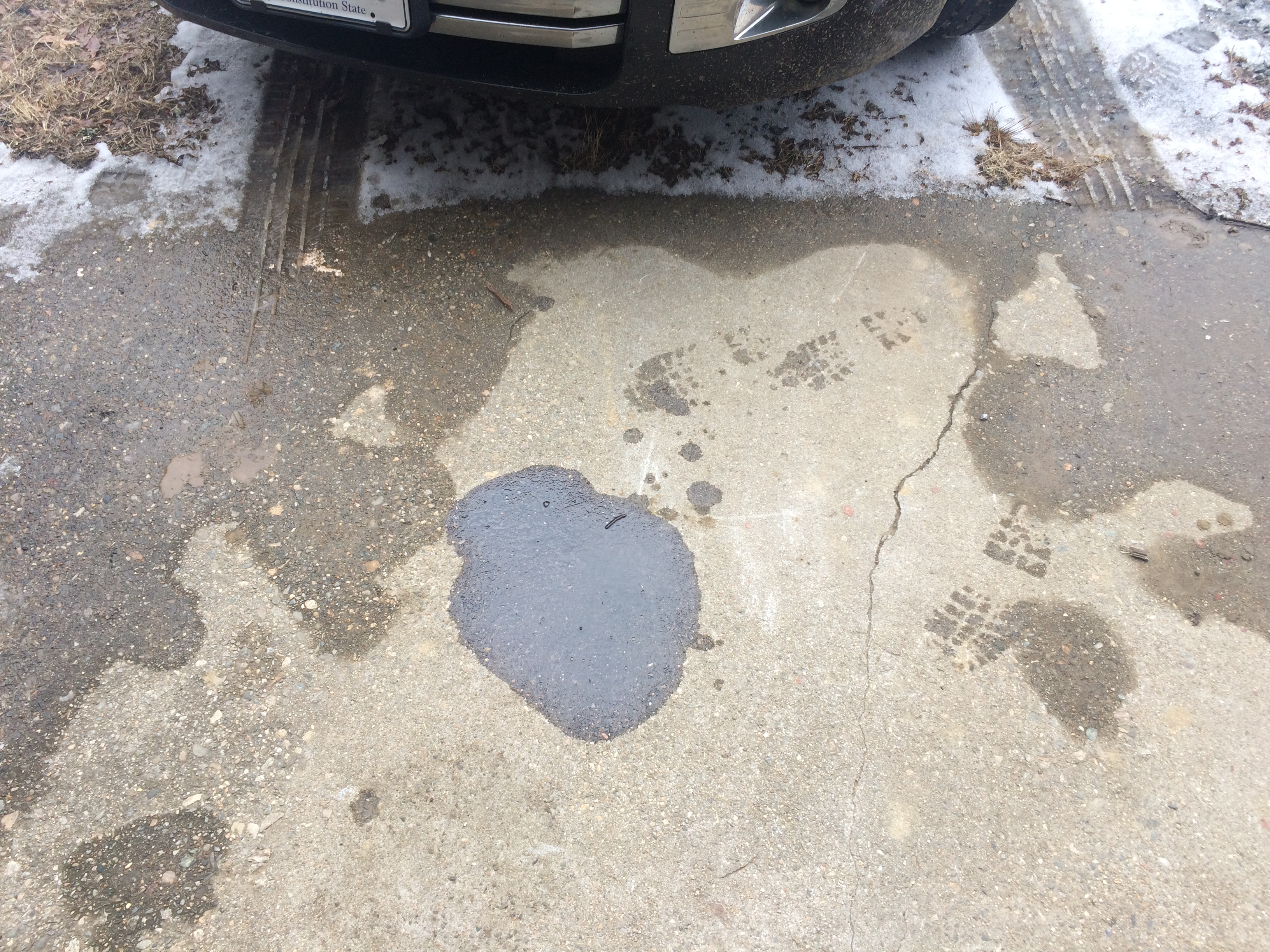
Since then I figured I was losing a quart of transmission fluid every three weeks. Since I had poor credit when I bought Olivia (a 2009 I bought in 2012), I was still paying high interest on a six year note...after five years, I guess the logical thing is for her to go. She looks so naked without the roof rack on for the first time in five years!
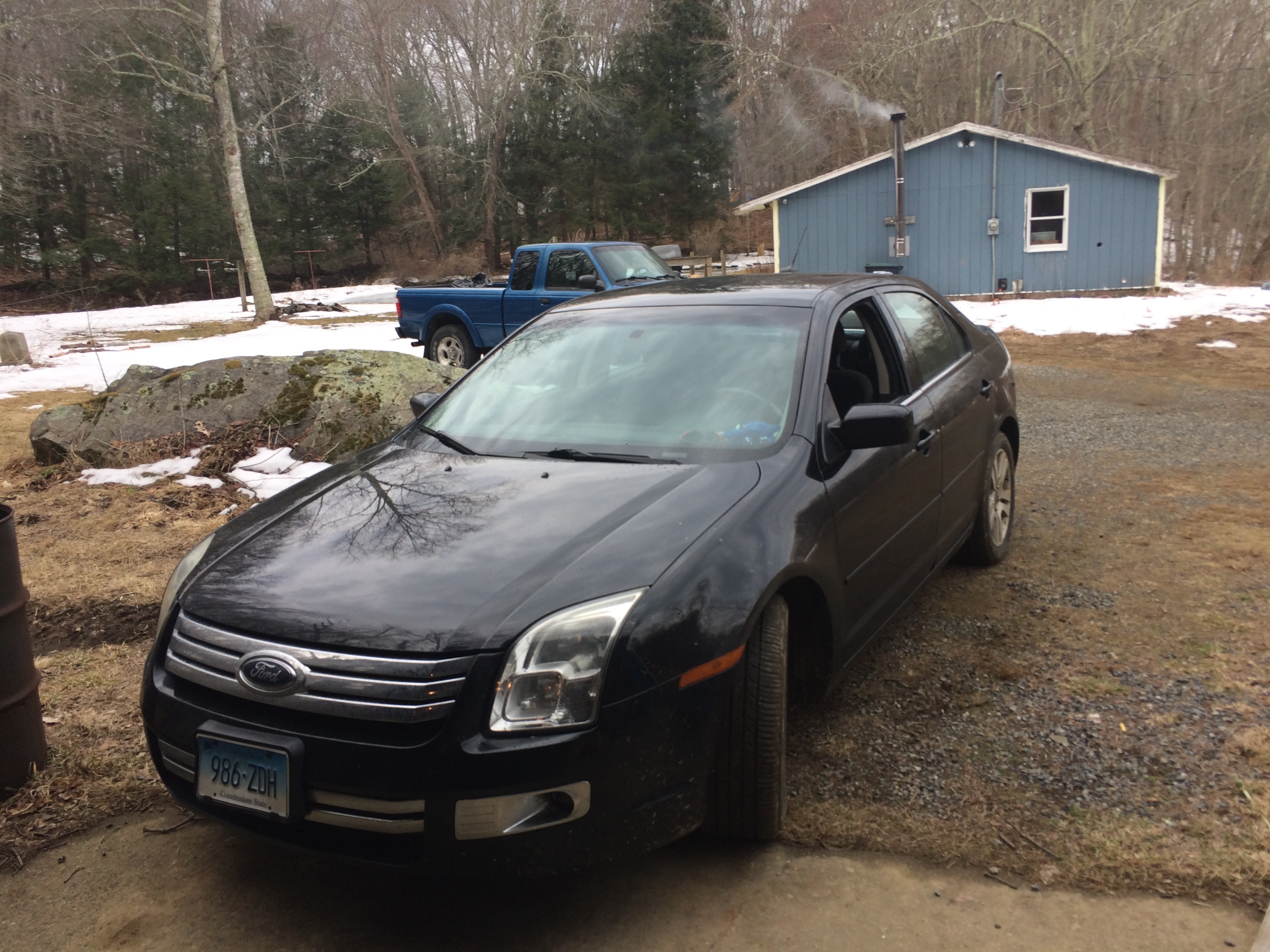
And a last, loving hand wash on the way to the dealership...
Let's see, of the pantheon of vehicles:
'78 Scout II had sentiment as the old family car, but one day I put on my seatbelt and the retractor pulled out of the rusted frame and landed on my lap o_O
The '82 Ranger got me around
As well as the '94 S-10 I bought new to replace the Ranger.
The '96 S-10 I bought a couple years later...that remains my favorite vehicle. That was just an awesome truck
But I traded it for a used '98 F-150 when it was high mileage and beginning to have issues (the hood cable broke the day I went to drive it to talk about the F-150! I was washing it and went to open the hood and felt it snap!)
The F-150 I never liked...too big, too small springs.
Saw a good price in Quincy, MA on a new '03 Ranger and bought that...I guess that one ranks third. But I rode it hard and put it away wet for everyone of it's 250,000+ miles.
Then came Olivia and I just loved this car
The '01 Ranger is also not bad, but just basic transport for my truck needs now.
We'll see were the new one fits.
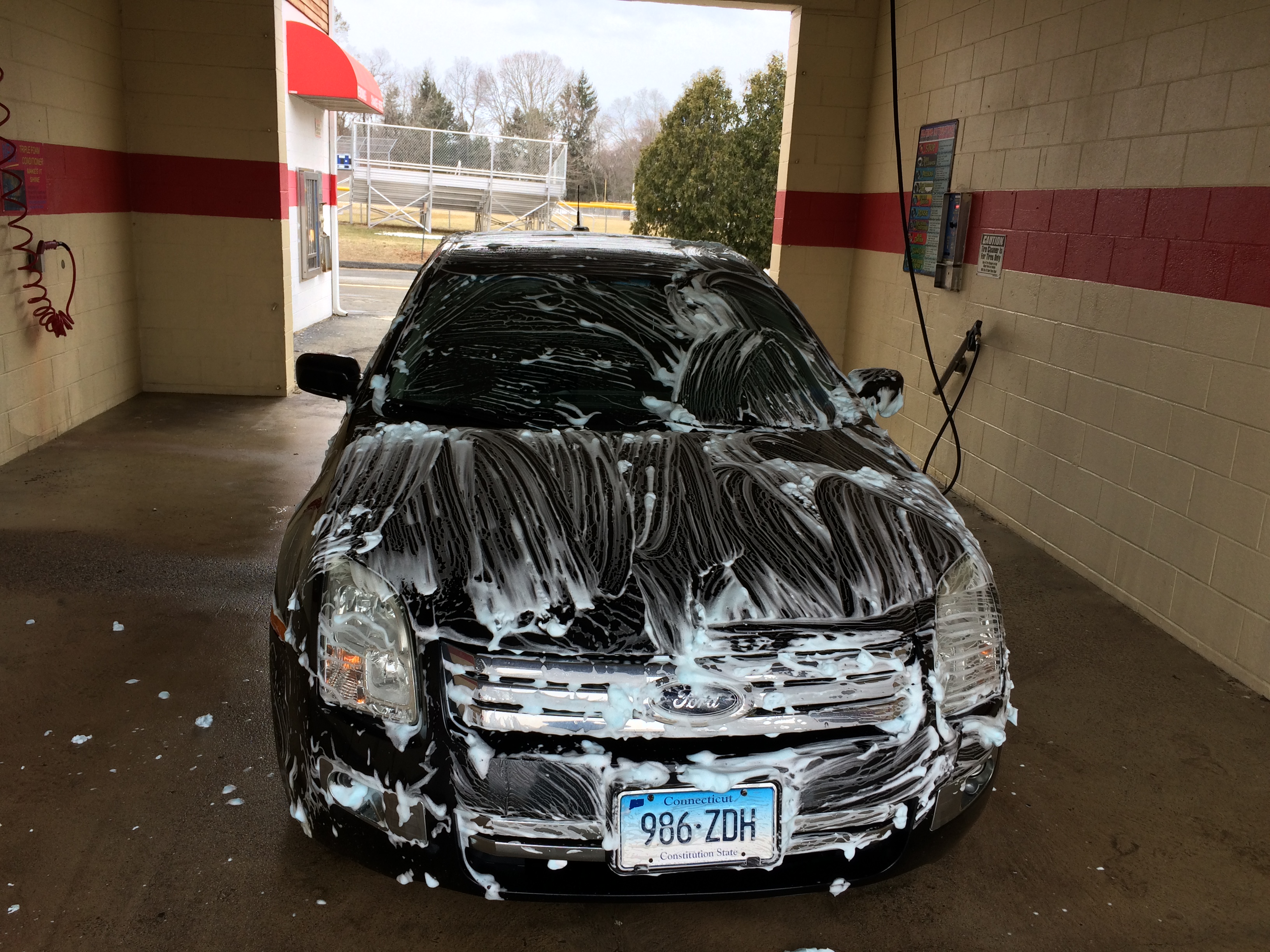
Actually went to look at the slightly redder '16 Fusion SE in the background (which was fresh from the Auction lot...and sure looked rough for the 4,000 miles on the odometer...), and slightly lower amenities then Olivia (manual rear view mirror? Mon dieux!). Then there was a beige '16 Fusion on the showroom floor that had a sunroof -- unlike the 2009 Fusions which I didn't have enough head room when they had sunroofs, I actually fit in the redesign...but it was beige. But on their lot was a '14 Fusion Titanium...
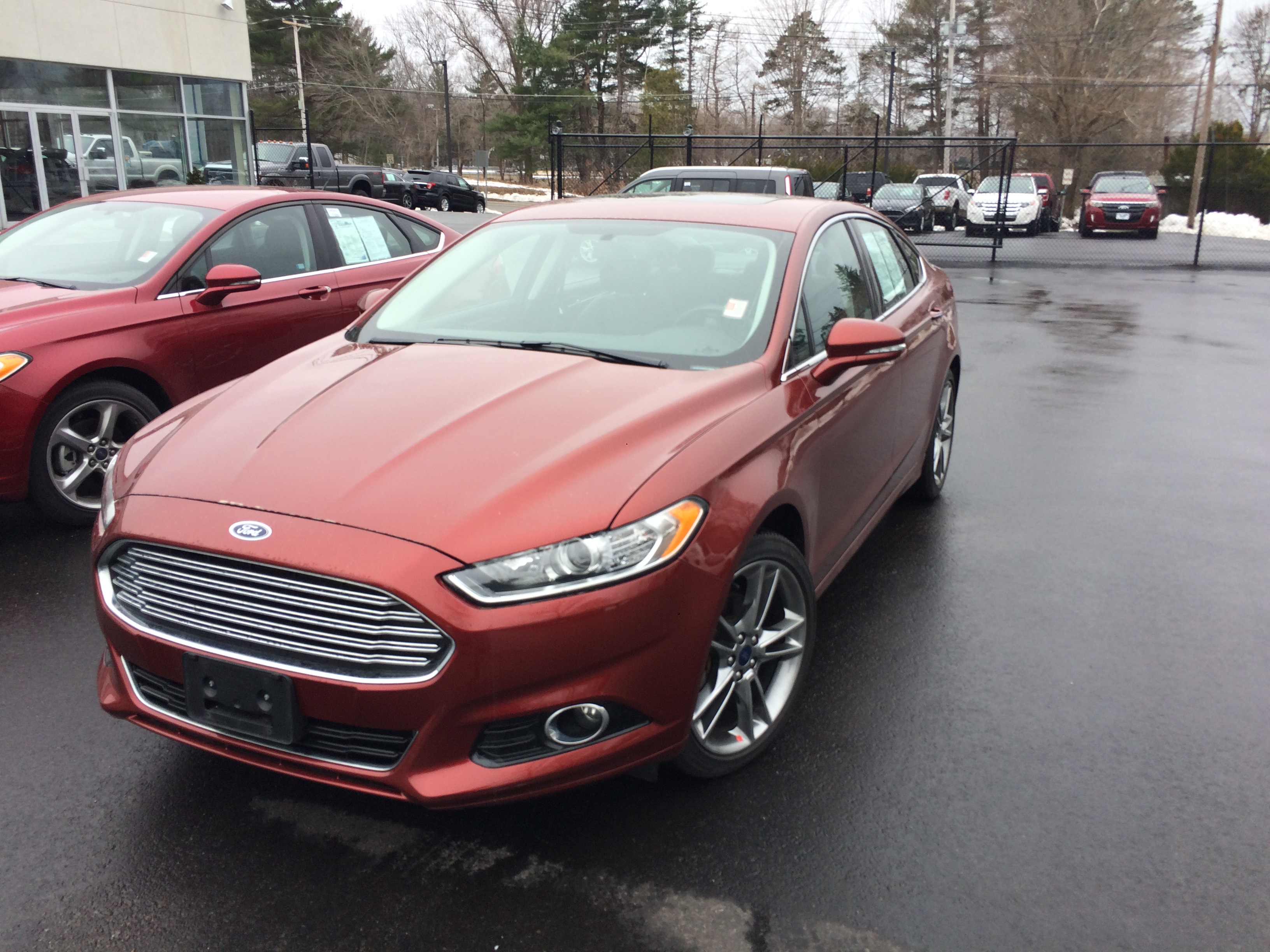
Queen Olivia I next to Queen Olivia II. Prince Consort Oliver, the scoundrel dragon mascot, will move from one to the other.
20,000 miles, came off a lease in Maine, AWD which I didn't need but the interior is pretty loaded. Call it a baby Lincoln.
I'll be taking delivery on Wednesday :)
Funny bit of sentimentality, reviewing my post I suddenly remembered, with a tear in my eye, the day I was driving Oscar back from the vets after he got his diagnosis of cancer and this song came on the radio:


I may the only blogger who blogs three months behind...Rogue One...
With the Borgeson Clan (with some substitutions)...back on opening weekend in December :/


Friday, March 17, 2017
Tuesday, March 14, 2017
From a snow day, to Brooklyn Savings Bank, to 125 year maturity bonds...
Wow...so last night I was still Googling about John M. Dean and one of the hits that came up was the 1921 Report of the Connecticut Bank Commissioner -- Mr. Dean was on the Board of Directors of Putnam Building & Loan Association.
Which made me go looking for the Brooklyn Savings Bank.
Clearly the regulators of the day like them to own things that included government bonds (local, state, federal, and foreign), railroad bonds, utility bonds, and other bank stocks. It seems pretty typical about 1/2 the deposits would be used for real estate loans, 5% in cash, and 45% in stocks and bonds as you look at other banks.
It seems modern tradition is the "loan to deposit" ratio not of 50% but of 80-90% is considered prudent; nationally it hit 100% in 2008 and 77% at its nadir following the crash. (Actually I guess the bonds could be considered loans...so maybe they count).
The inflation adjustment for 1921-2017 is 13.5 -- $10,000 then is $135,000 today.
Jewett City Savings today with a main office and four branches has $269M in assets, while Brooklyn Savings Bank adjusted for inflation had $52 million in a single main office...damn, that's pretty comparable on a per location basis!


And while scrolling near by, my eye was caught by this bond of the Northern Pacific that doesn't mature for another 30 years from when I'm typing this (in 2017!):

Da heck? And it didn't seem an anomaly since there was many other long maturity railroad bonds. These apparently were a fairly routine instrument, with the expectation that they would be called long before maturity by the railroads.
Even today companies like Coca Cola and Disney are sometimes asked by institutional investors to issue 100 year bonds callable after 30 years for the purposes of balancing the spreadsheets of the investors (say they have a lot of 5 and 10 year maturity bonds, they may have a requirement for XX% of assets to mature in 20 or more years and a 100 year bond pulls that average up...at least that's my I didn't stay at a Holiday Inn Express last night but did use Google understanding.)
Which made me go looking for the Brooklyn Savings Bank.
Clearly the regulators of the day like them to own things that included government bonds (local, state, federal, and foreign), railroad bonds, utility bonds, and other bank stocks. It seems pretty typical about 1/2 the deposits would be used for real estate loans, 5% in cash, and 45% in stocks and bonds as you look at other banks.
It seems modern tradition is the "loan to deposit" ratio not of 50% but of 80-90% is considered prudent; nationally it hit 100% in 2008 and 77% at its nadir following the crash. (Actually I guess the bonds could be considered loans...so maybe they count).
The inflation adjustment for 1921-2017 is 13.5 -- $10,000 then is $135,000 today.
Jewett City Savings today with a main office and four branches has $269M in assets, while Brooklyn Savings Bank adjusted for inflation had $52 million in a single main office...damn, that's pretty comparable on a per location basis!


And while scrolling near by, my eye was caught by this bond of the Northern Pacific that doesn't mature for another 30 years from when I'm typing this (in 2017!):

Da heck? And it didn't seem an anomaly since there was many other long maturity railroad bonds. These apparently were a fairly routine instrument, with the expectation that they would be called long before maturity by the railroads.
Even today companies like Coca Cola and Disney are sometimes asked by institutional investors to issue 100 year bonds callable after 30 years for the purposes of balancing the spreadsheets of the investors (say they have a lot of 5 and 10 year maturity bonds, they may have a requirement for XX% of assets to mature in 20 or more years and a 100 year bond pulls that average up...at least that's my I didn't stay at a Holiday Inn Express last night but did use Google understanding.)
Monday, March 13, 2017
John M. Dean, Needles, and American Patrol
With the Blizzard of '17 bearing down, I saw on WINY that John M. Dean was one of many companies cancelling tomorrow's shifts.
I didn't recognize the name, so I googled it -- they've been in business for over a century making needles and other sharp, pointy things.
More Googling reveals they were an early maker of record needles, with a capacity of two million per day!
https://books.google.com/books?id=5exBAQAAMAAJ&dq=john%20m.%20dean%20needle&pg=PA748#v=onepage&q=john%20m.%20dean%20needle&f=false

I browsed down a bit from that, which brought me to a list of Columbia's best selling albums of that month in 1917...which included American Patrol.
American Patrol? I only knew that song from the Glen Miller version:
But it turns out it was originally written in 1885 (for piano) and turned into a march and symphony arrangements long before Glen Miller got to it!
So yeah, a snowstorm took me down a rabbit hole of Googling to learn that one of my favorite World War II songs was written sixty years before World War II.
I didn't recognize the name, so I googled it -- they've been in business for over a century making needles and other sharp, pointy things.
More Googling reveals they were an early maker of record needles, with a capacity of two million per day!
https://books.google.com/books?id=5exBAQAAMAAJ&dq=john%20m.%20dean%20needle&pg=PA748#v=onepage&q=john%20m.%20dean%20needle&f=false

I browsed down a bit from that, which brought me to a list of Columbia's best selling albums of that month in 1917...which included American Patrol.
American Patrol? I only knew that song from the Glen Miller version:
But it turns out it was originally written in 1885 (for piano) and turned into a march and symphony arrangements long before Glen Miller got to it!
So yeah, a snowstorm took me down a rabbit hole of Googling to learn that one of my favorite World War II songs was written sixty years before World War II.
Sunday, March 12, 2017

Sunday, March 5, 2017
Connecticut Mills to come down...
Saw a report yesterday that Connecticut Mills (a/k/a Powdrell & Alexander #3, a/k/a Risom) is to be torn down once the demolition of the P&A Mill at the old rotary is complete. The Providence & Worcester Railroad has complained that the rear of the mill is start to collapse, endangering the railroad tracks.

I found that cool drawing at https://www.digitalcommonwealth.org/search/commonwealth:2r36vc08h
And while googling around saw a reference to it being a former furniture factory which surprised me -- indeed, the name "Risom" was for the furniture company which originally began production in North Grosvenordale before moving here.
Even more surprising, they were a leader in mid-century Modern furniture (with the founder musing chairs that sold for $21 after World War II now sell for $600 as antiques):

Much more on Jens Risom here: http://www.dedeceblog.com/2010/07/06/jens-risom-a-20th-century-design-star-2/ (which is such a good article, I archived it here.)

I found that cool drawing at https://www.digitalcommonwealth.org/search/commonwealth:2r36vc08h
And while googling around saw a reference to it being a former furniture factory which surprised me -- indeed, the name "Risom" was for the furniture company which originally began production in North Grosvenordale before moving here.
Even more surprising, they were a leader in mid-century Modern furniture (with the founder musing chairs that sold for $21 after World War II now sell for $600 as antiques):

Much more on Jens Risom here: http://www.dedeceblog.com/2010/07/06/jens-risom-a-20th-century-design-star-2/ (which is such a good article, I archived it here.)
Sunday, January 29, 2017
Horseshoe Dams & Other Water Play in Rhode Island (Photos)
So goal for today was to play with the camera and water.
One of several destinations I was thinking of was the "Old Stone Dam" in Hope Valley, which honestly I didn't know had a name until I got there. I just remembered from my Sunday drives it had rushing water and easy access.
Once I saw the dam was a Horseshoe dam, it made for a theme.
I believe this dam -- which was horseshoe shape in 1765 was that shape for aesthetic reasons, instead of the engineering reasons of later horseshoes.
As usual, click on a link and substitute "CR2" for "jpg" to get the raw photo :)
I guess I need to add brush loppers to my camera kit :D

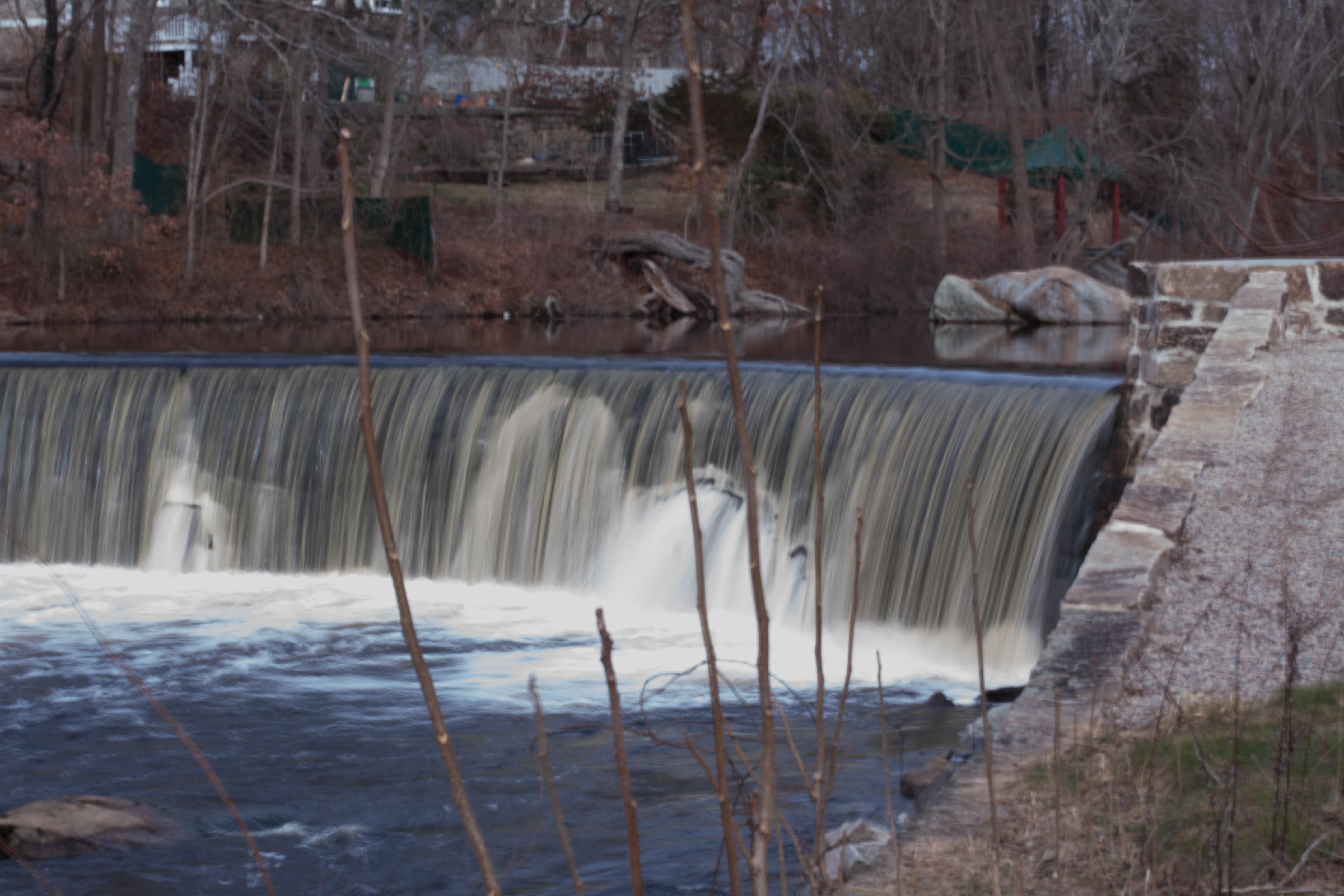
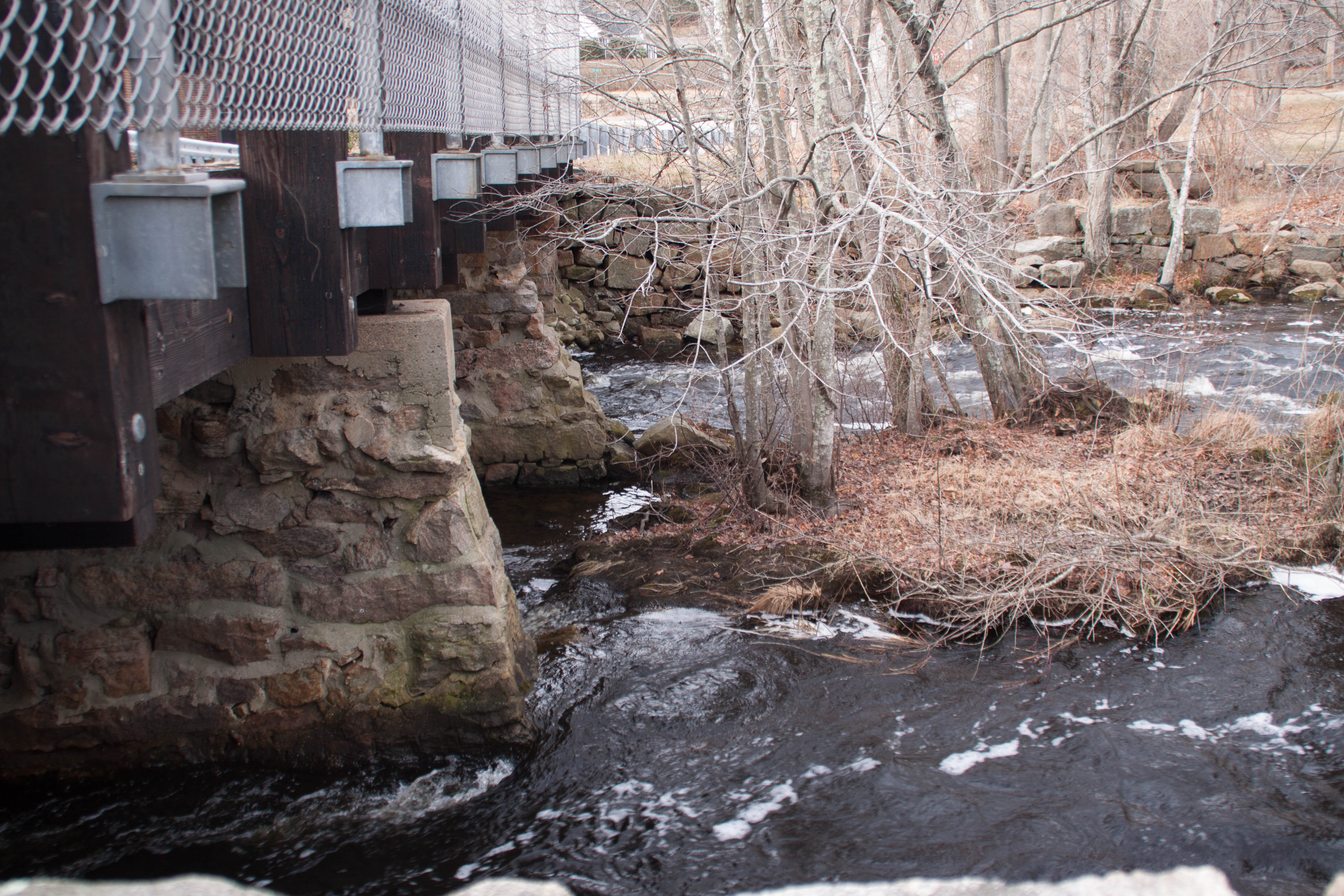
A lot that I was working with today was changing exposures to get the "silky" look instead of the "drops frozen in a strobe" look.
For example, frozen:

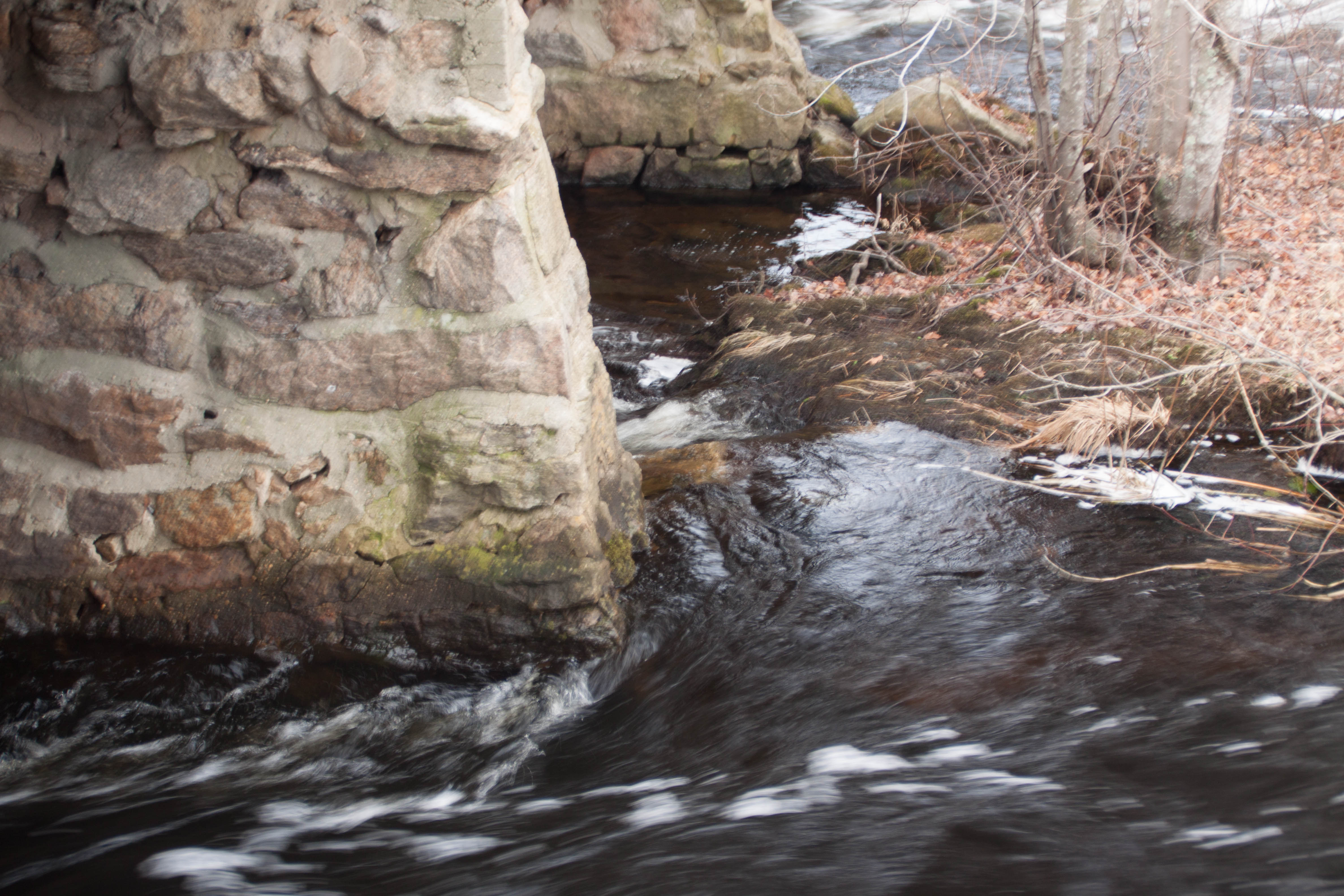
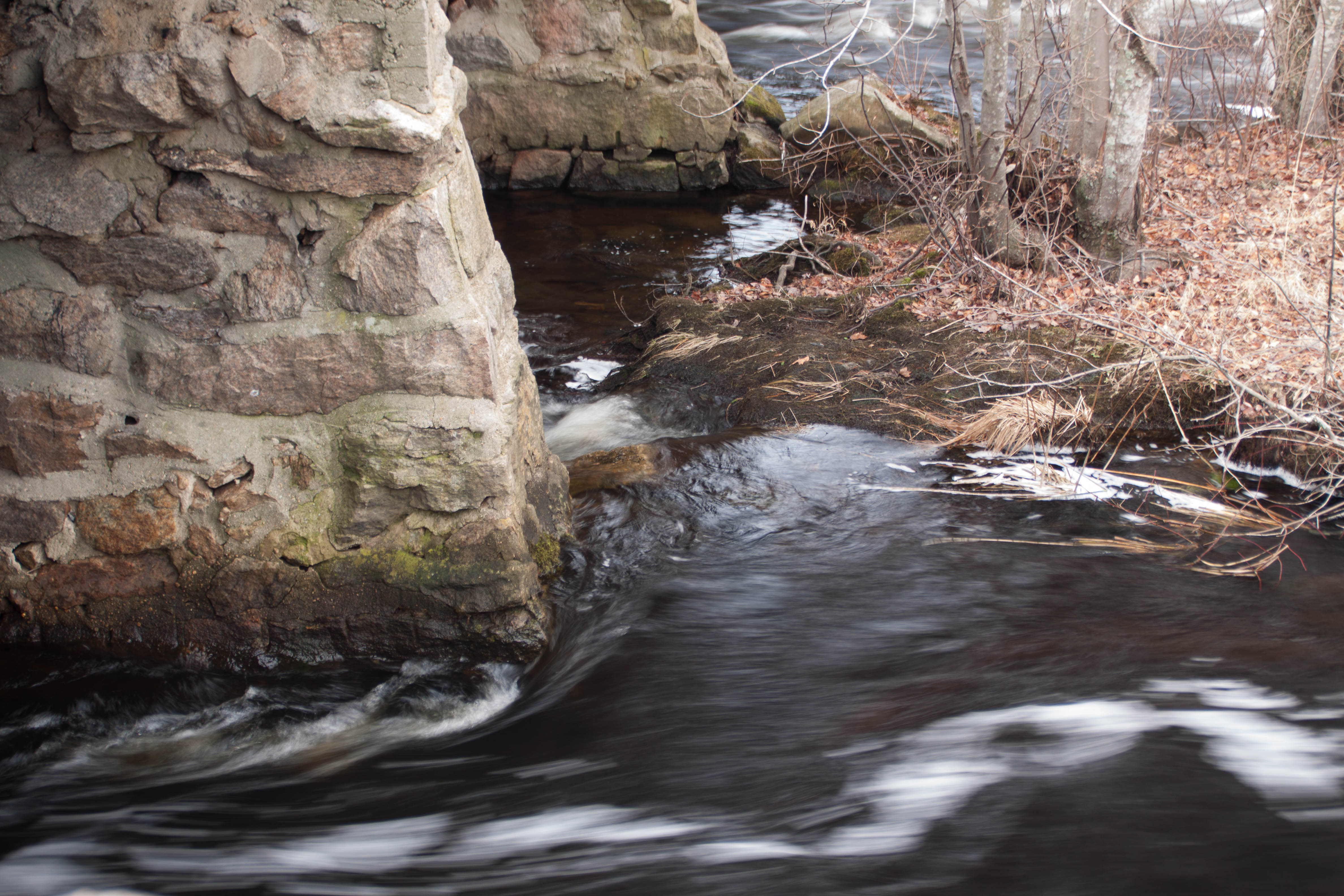
I believe I had a filter on already (though it may have been a polarizing rather than a neutral density). Change my f/stop to require a longer exposure:

Another set. I used LightRoom heavily to get the exposures equalized on pairs of pics:


And three...which caught some nice eddies. I could use some additional filters or maybe a Variable Neutral Density to really play with this effect w/o having to change the f/stop (and thus the focus area) dramatically:


The dam had been harnessing the Wood River over a century already when this mill was built in 1869. The smoke stack went with a different mill that was on the other side of the river until it burned in the 1970s. I read this past week that Wauregan Mills (far larger) burned 1,000 cords of wood and 1,000 tons of coal a year in their boilers to supplement their water power -- 1,000 cords would require a "wood shed" of 2,000 acres in Connecticut to continuously supply on a sustainable basis.


Gosh, this must be a pretty spot to photograph in the fall!

On my way to Shannock I missed the turn and ended up in Kenyon.
But it gave me an opportunity to see something I previously read about -- a group has been working to remove impediments to fish migrations along the Pawcatuck River. Here in Kenyon removing the dam was an option as the still active mill (it produces cloth primarily for the military) used the pond to supply it's fire sprinkler system. So instead of series of "steps" were built with rock rubble to create an artificial falls eels and fish and migrate up on their own:


Which brings us to Shannock -- they didn't want to remove this Horseshoe dam for it's historical and aesthetic value, plus looking at the rocks they seem the "natural" falls would be more difficult for fish than the fish and eel ladders. There are separate ladders, but share the same area on the dam's left.
This dam WAS built for engineering reasons -- it allows a lot more water to flow over the top compared to a straight dam the same length as the open end of the horseshoe. They are used when similar height, straight dam would too easily be "flanked" by a flood causing it to wash out. Taking advantage of the deep gorge, a horseshoe here works perfectly.


More playing with exposure times


Sure is a mild January -- Kayakers! And leaving afterwards there was a pack of bicyclists heading into the village!


Over did it with LightRoom? I dunno, reminds me of some of the WWII era color photos I've seen!

Another Horseshoe -- on Old Route 6 in North Scituate.
Most people probably think of it as the "Scituate Reservoir" but this dam north of the highway impounds the "Regulating Reservoir" -- it flows immediately into the actual Scituate Reservoir. It was completed before the Scituate Dam, and until the Scituate Reservoir went online it was used to supplement Providence's old pumping station so my guess is "regulating" referred to keeping a constant supply of water. Just my guess.

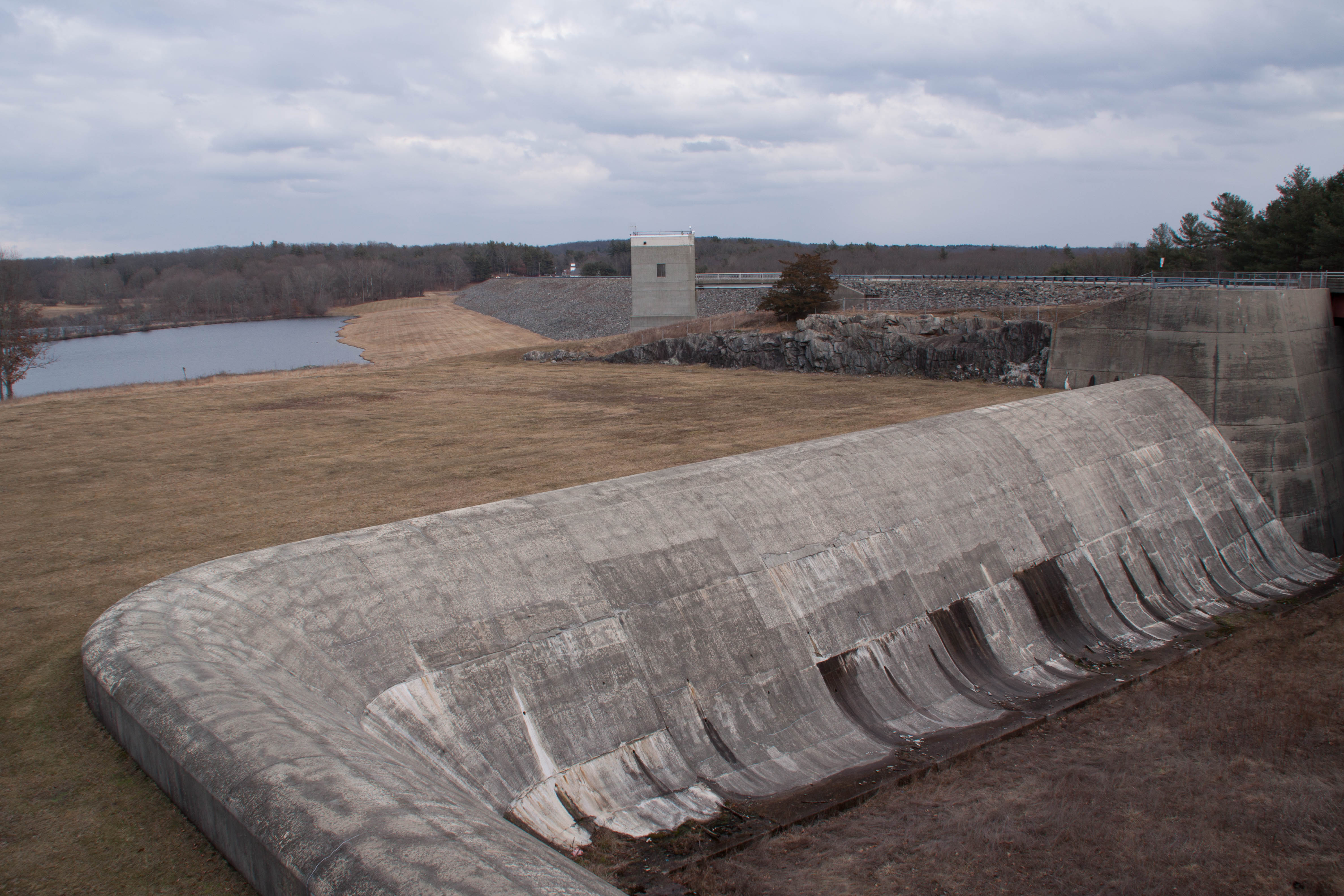
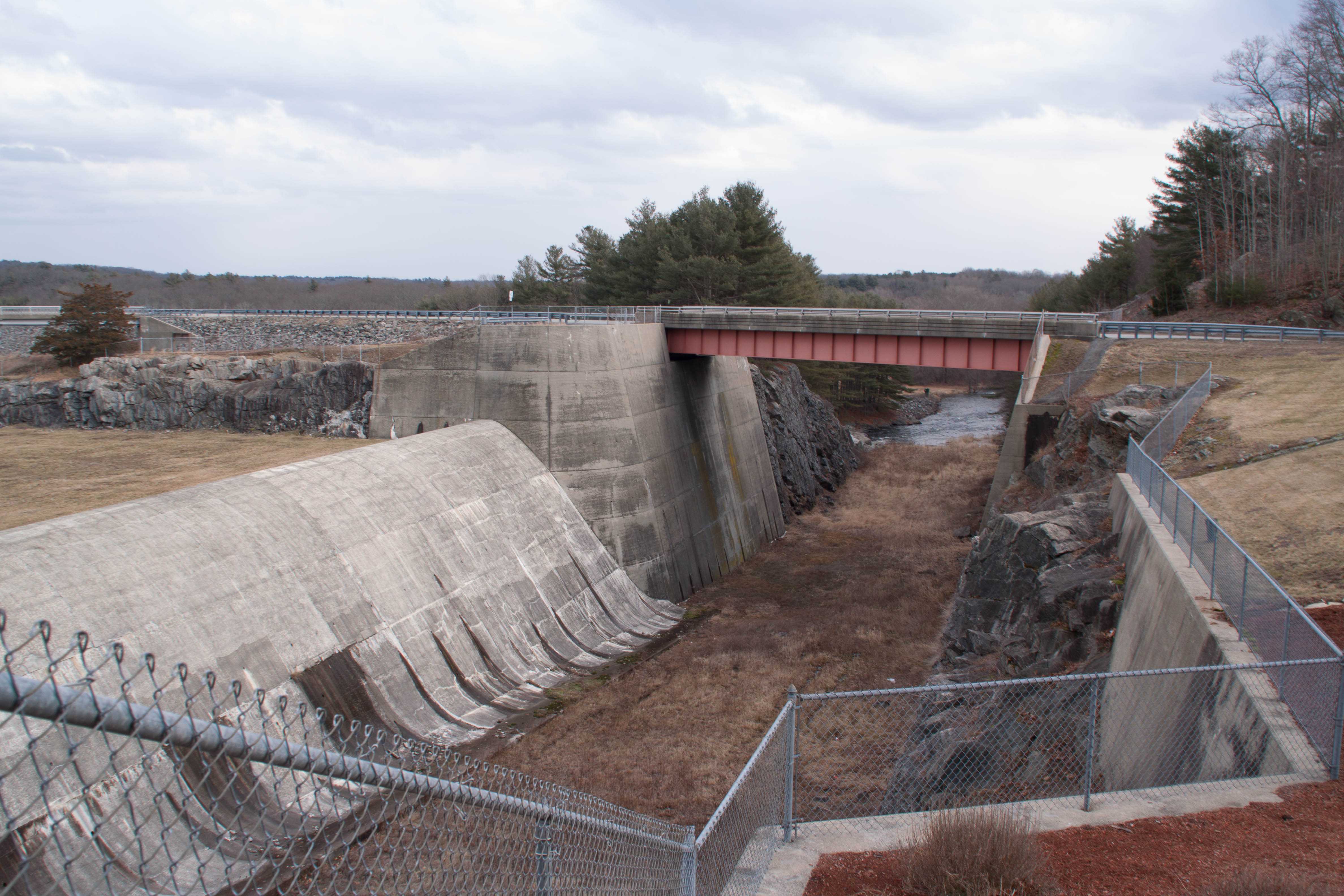
Then I remembered another Horseshoe built two centuries after the one in Hope Valley -- this time the spillway at the West Thompson flood control dam (well 3/5ths of a Horseshoe anyways):


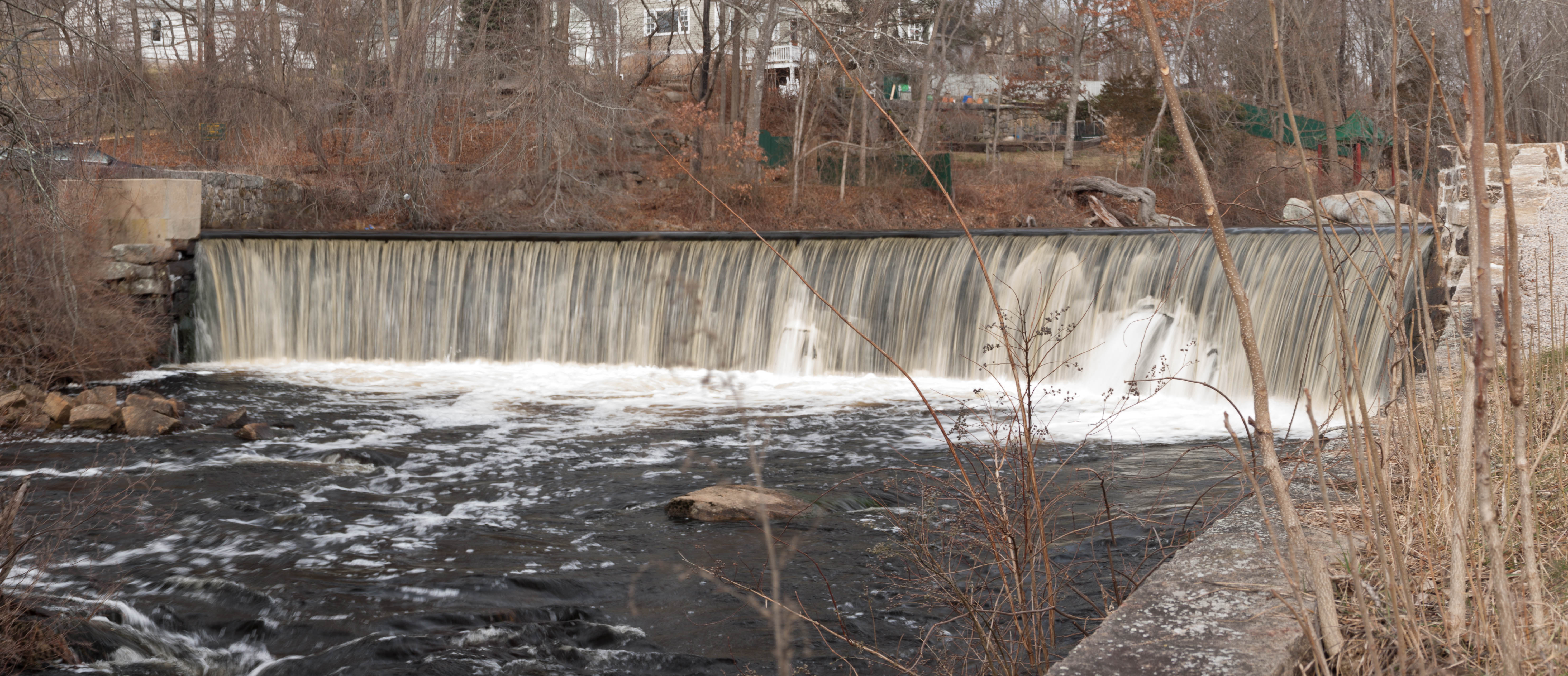
Oh...and just remembered I took this of photos just to use LightRoom to create a Panorama from five individual shots:

One of several destinations I was thinking of was the "Old Stone Dam" in Hope Valley, which honestly I didn't know had a name until I got there. I just remembered from my Sunday drives it had rushing water and easy access.
Once I saw the dam was a Horseshoe dam, it made for a theme.
I believe this dam -- which was horseshoe shape in 1765 was that shape for aesthetic reasons, instead of the engineering reasons of later horseshoes.
As usual, click on a link and substitute "CR2" for "jpg" to get the raw photo :)
I guess I need to add brush loppers to my camera kit :D
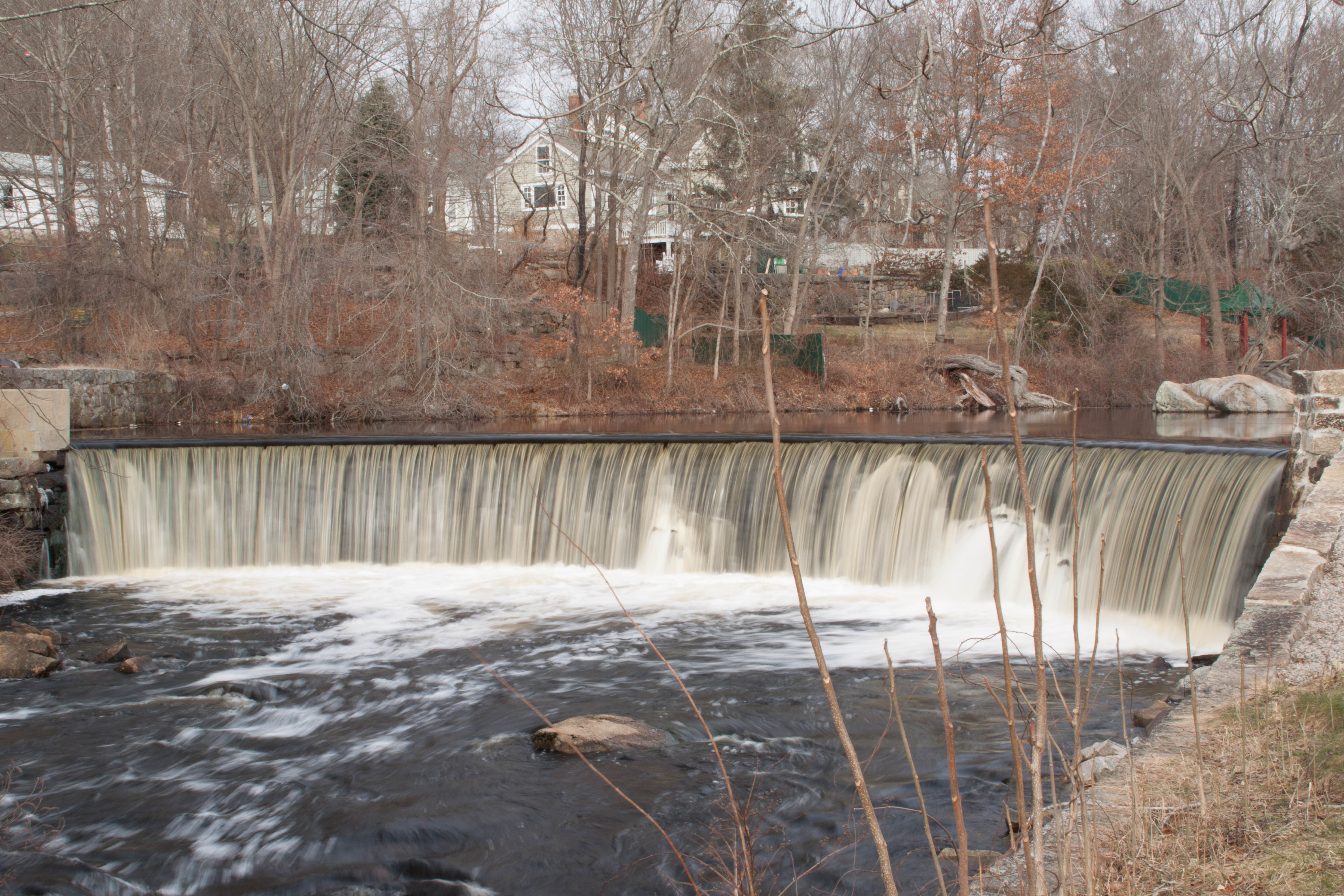
A lot that I was working with today was changing exposures to get the "silky" look instead of the "drops frozen in a strobe" look.
For example, frozen:
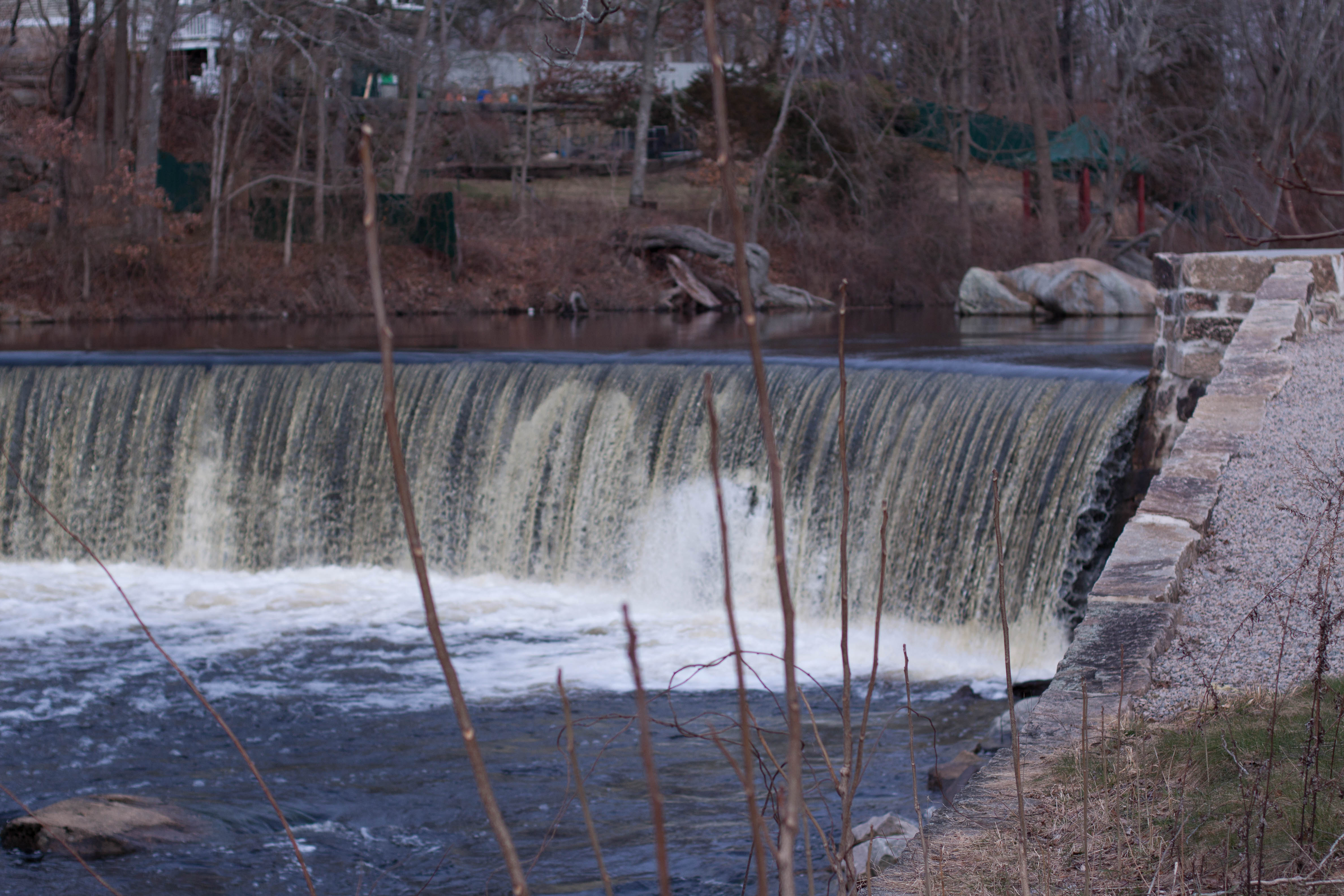
I believe I had a filter on already (though it may have been a polarizing rather than a neutral density). Change my f/stop to require a longer exposure:
Another set. I used LightRoom heavily to get the exposures equalized on pairs of pics:
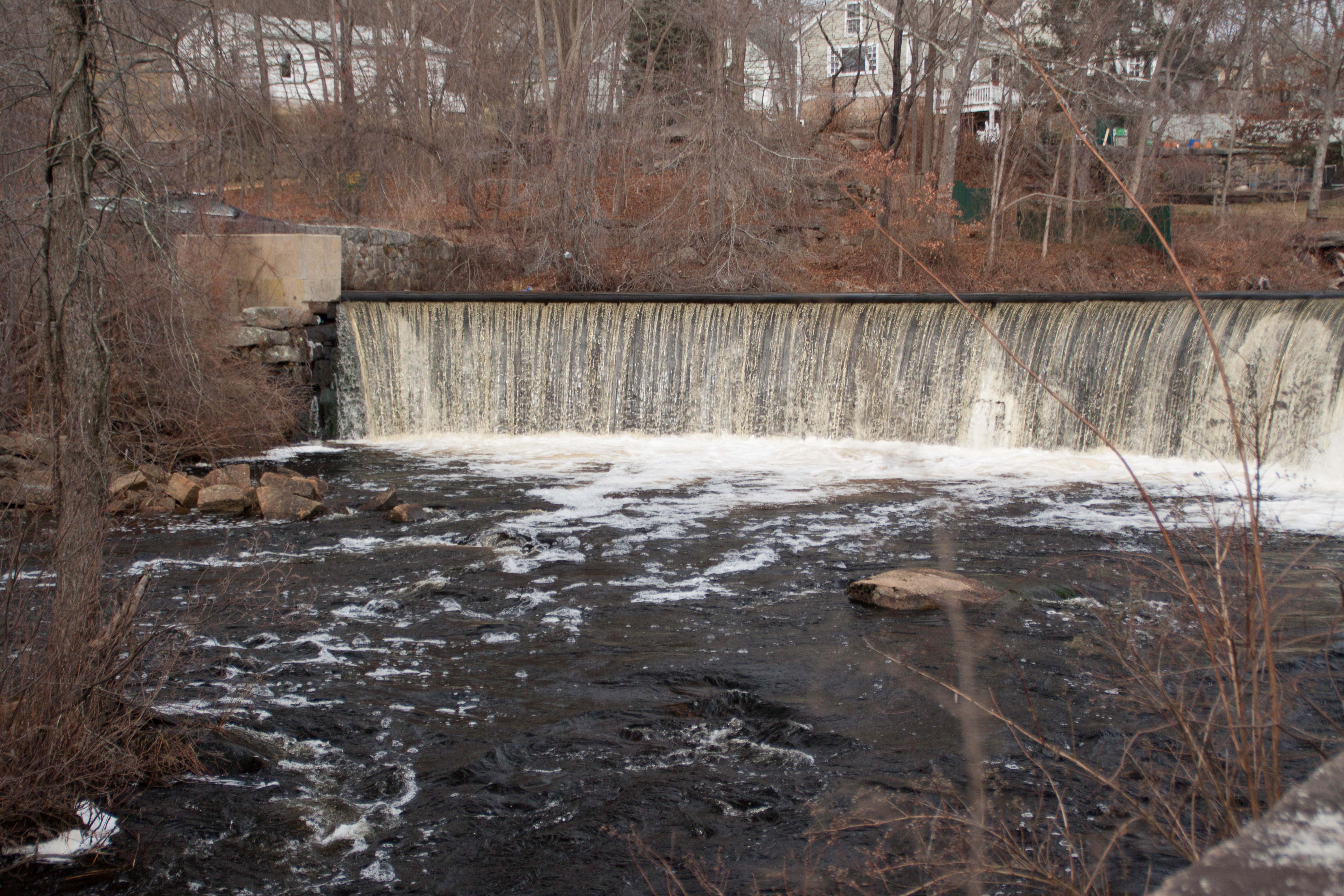
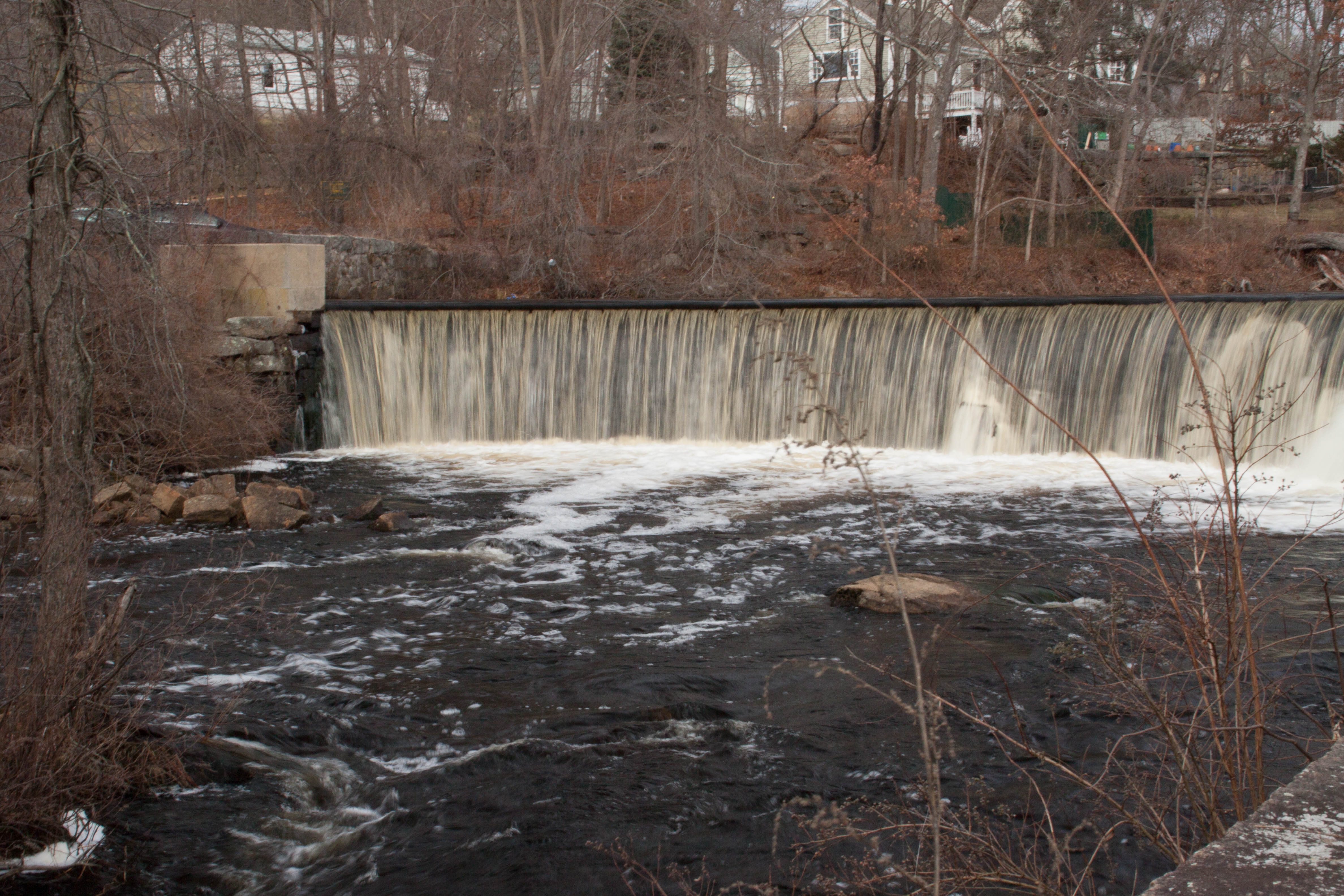
And three...which caught some nice eddies. I could use some additional filters or maybe a Variable Neutral Density to really play with this effect w/o having to change the f/stop (and thus the focus area) dramatically:
The dam had been harnessing the Wood River over a century already when this mill was built in 1869. The smoke stack went with a different mill that was on the other side of the river until it burned in the 1970s. I read this past week that Wauregan Mills (far larger) burned 1,000 cords of wood and 1,000 tons of coal a year in their boilers to supplement their water power -- 1,000 cords would require a "wood shed" of 2,000 acres in Connecticut to continuously supply on a sustainable basis.
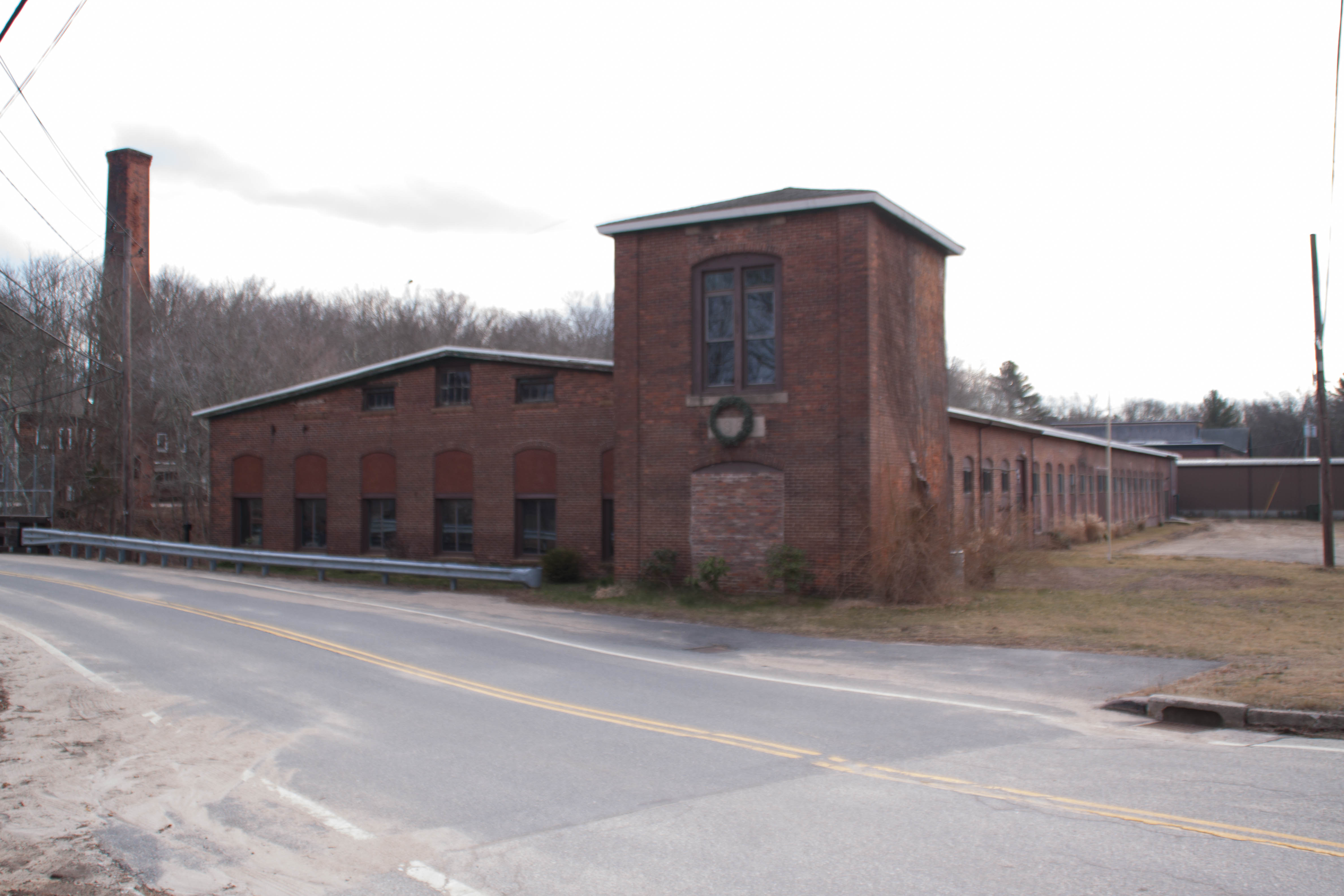
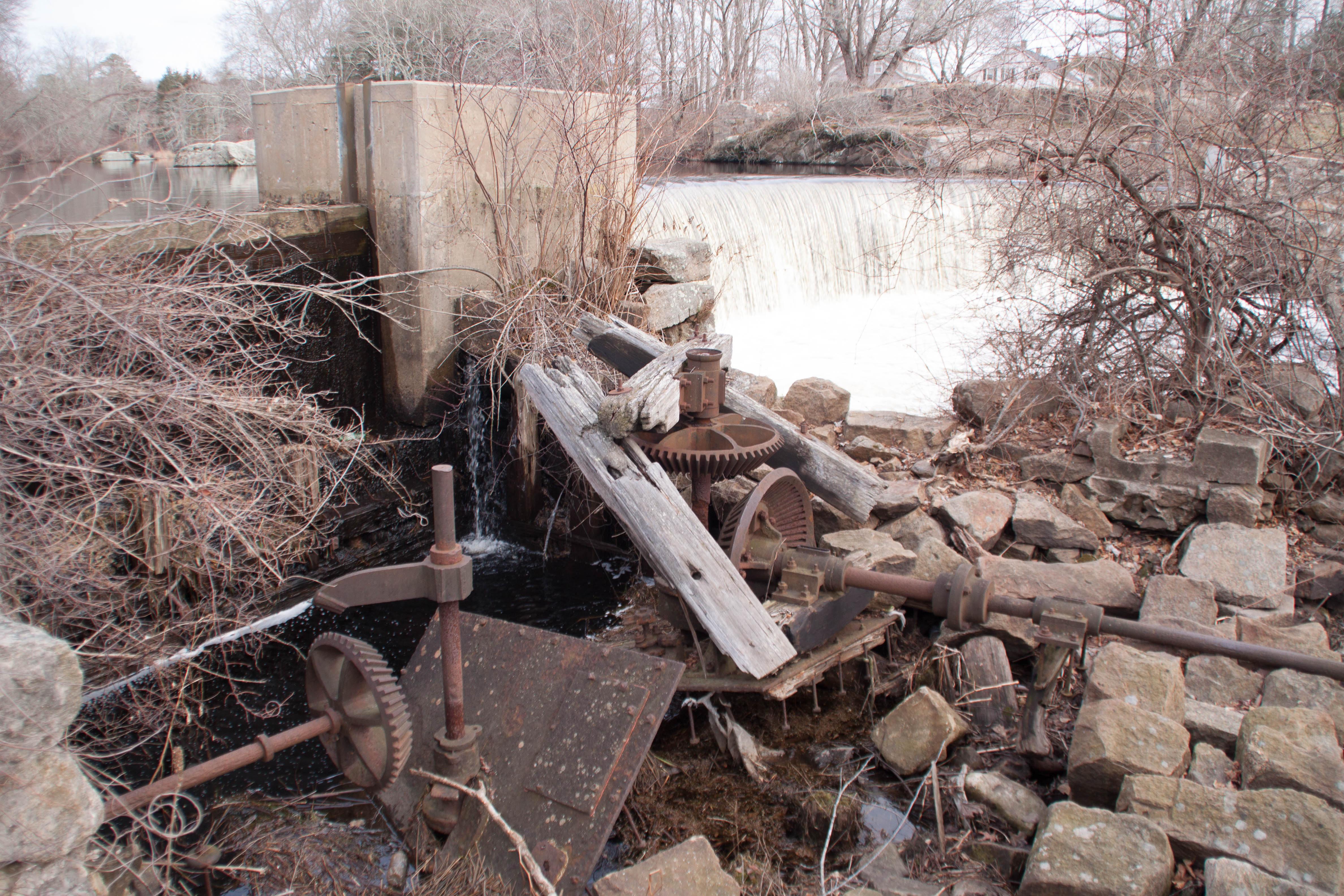
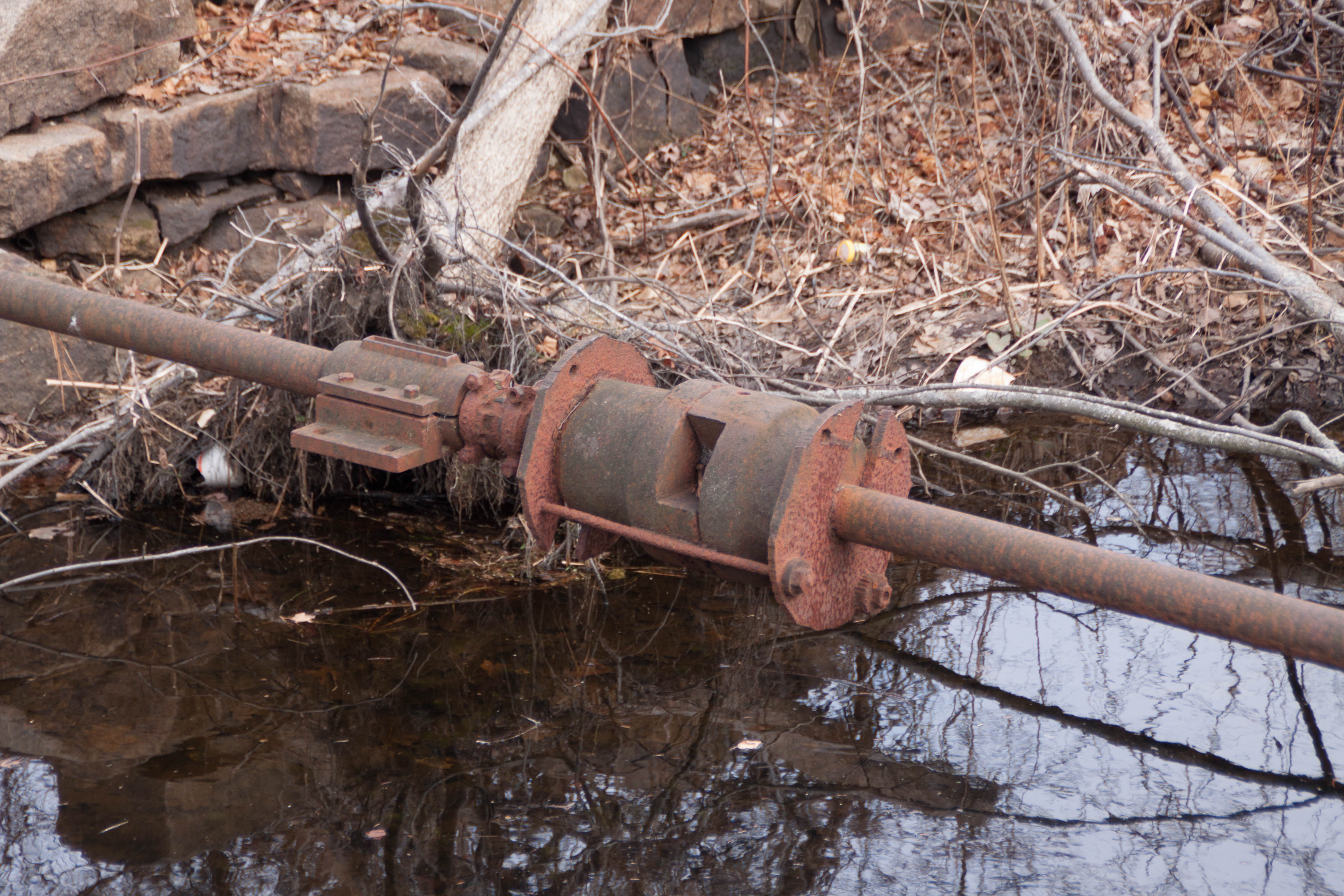
Gosh, this must be a pretty spot to photograph in the fall!
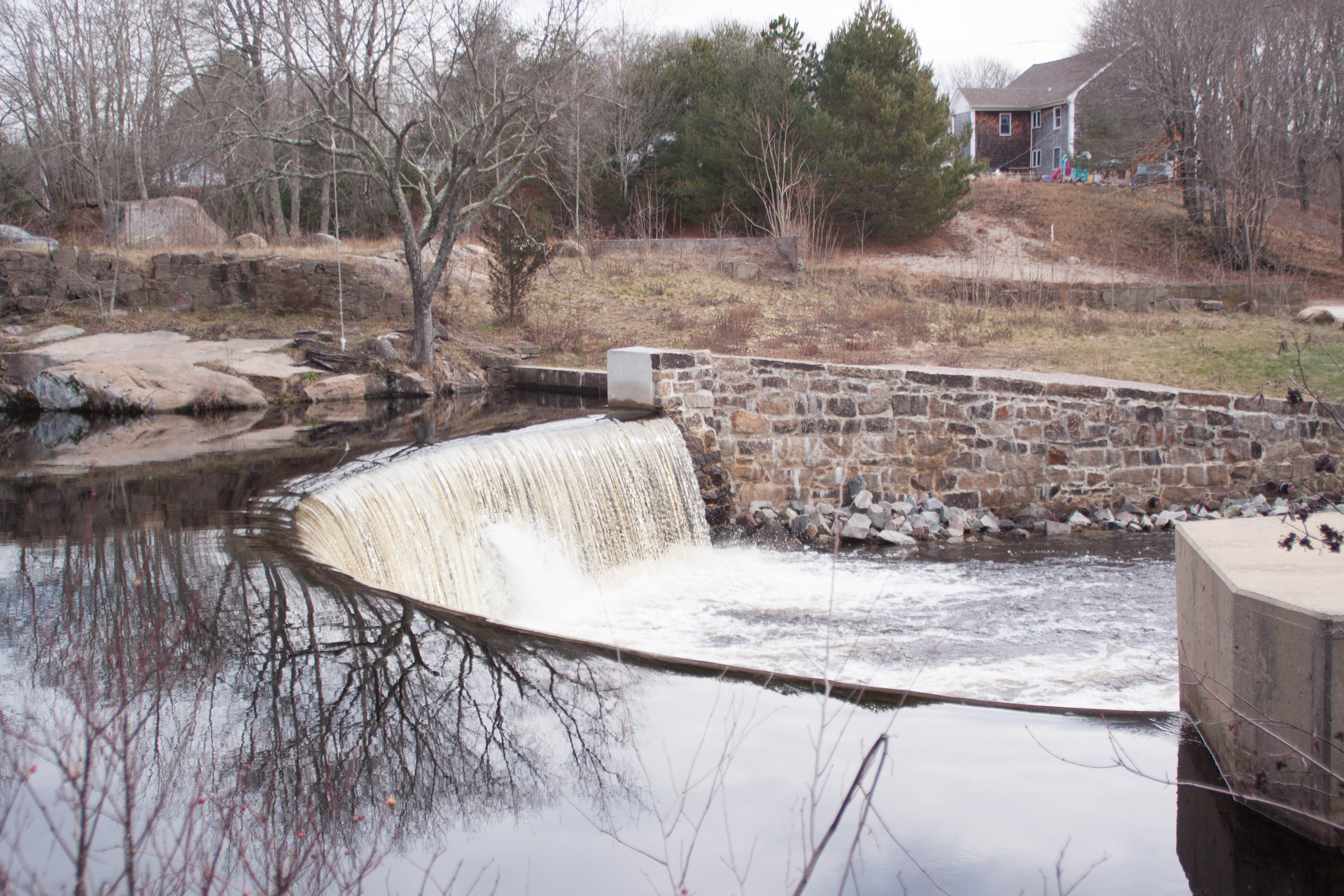
On my way to Shannock I missed the turn and ended up in Kenyon.
But it gave me an opportunity to see something I previously read about -- a group has been working to remove impediments to fish migrations along the Pawcatuck River. Here in Kenyon removing the dam was an option as the still active mill (it produces cloth primarily for the military) used the pond to supply it's fire sprinkler system. So instead of series of "steps" were built with rock rubble to create an artificial falls eels and fish and migrate up on their own:
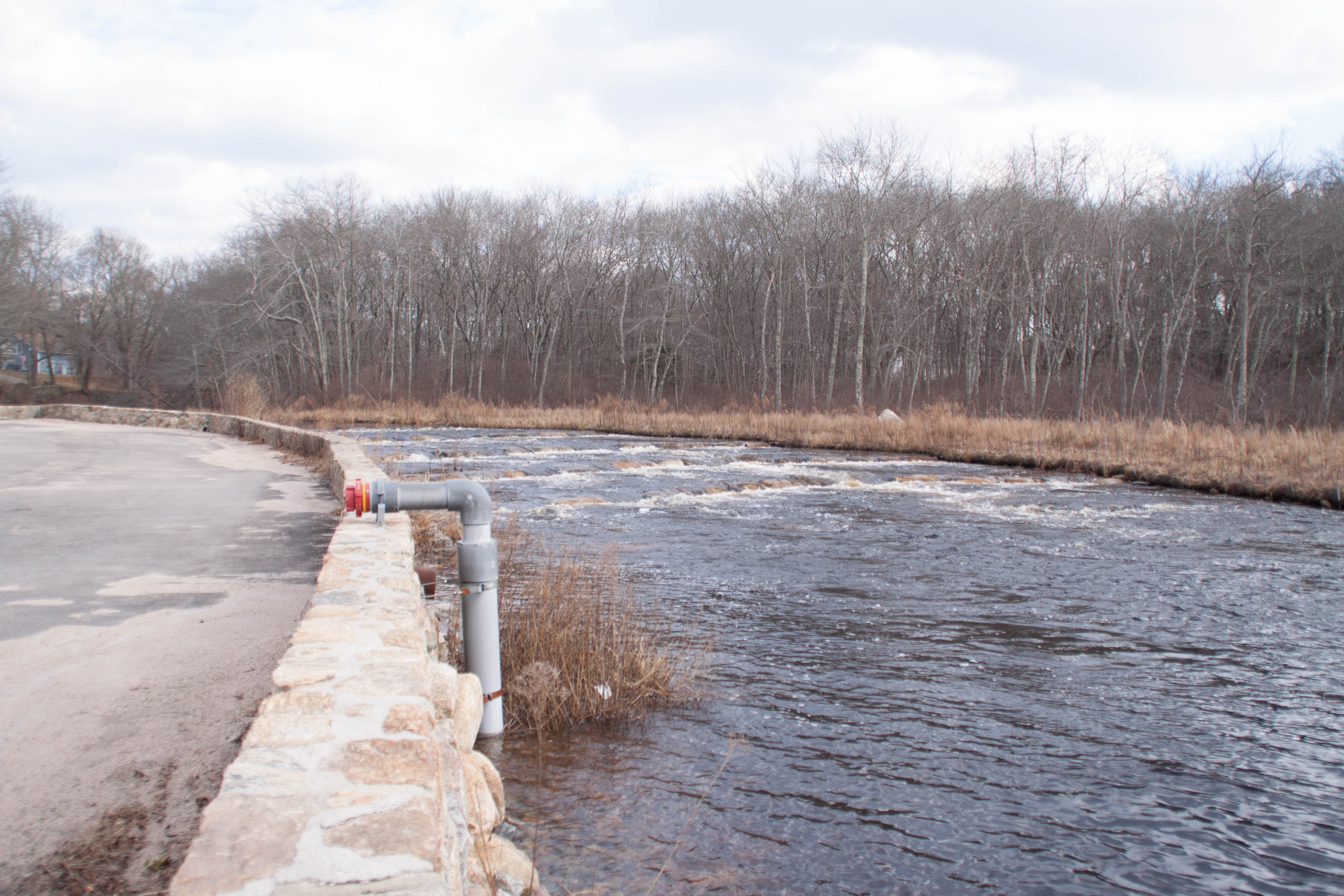

Which brings us to Shannock -- they didn't want to remove this Horseshoe dam for it's historical and aesthetic value, plus looking at the rocks they seem the "natural" falls would be more difficult for fish than the fish and eel ladders. There are separate ladders, but share the same area on the dam's left.
This dam WAS built for engineering reasons -- it allows a lot more water to flow over the top compared to a straight dam the same length as the open end of the horseshoe. They are used when similar height, straight dam would too easily be "flanked" by a flood causing it to wash out. Taking advantage of the deep gorge, a horseshoe here works perfectly.
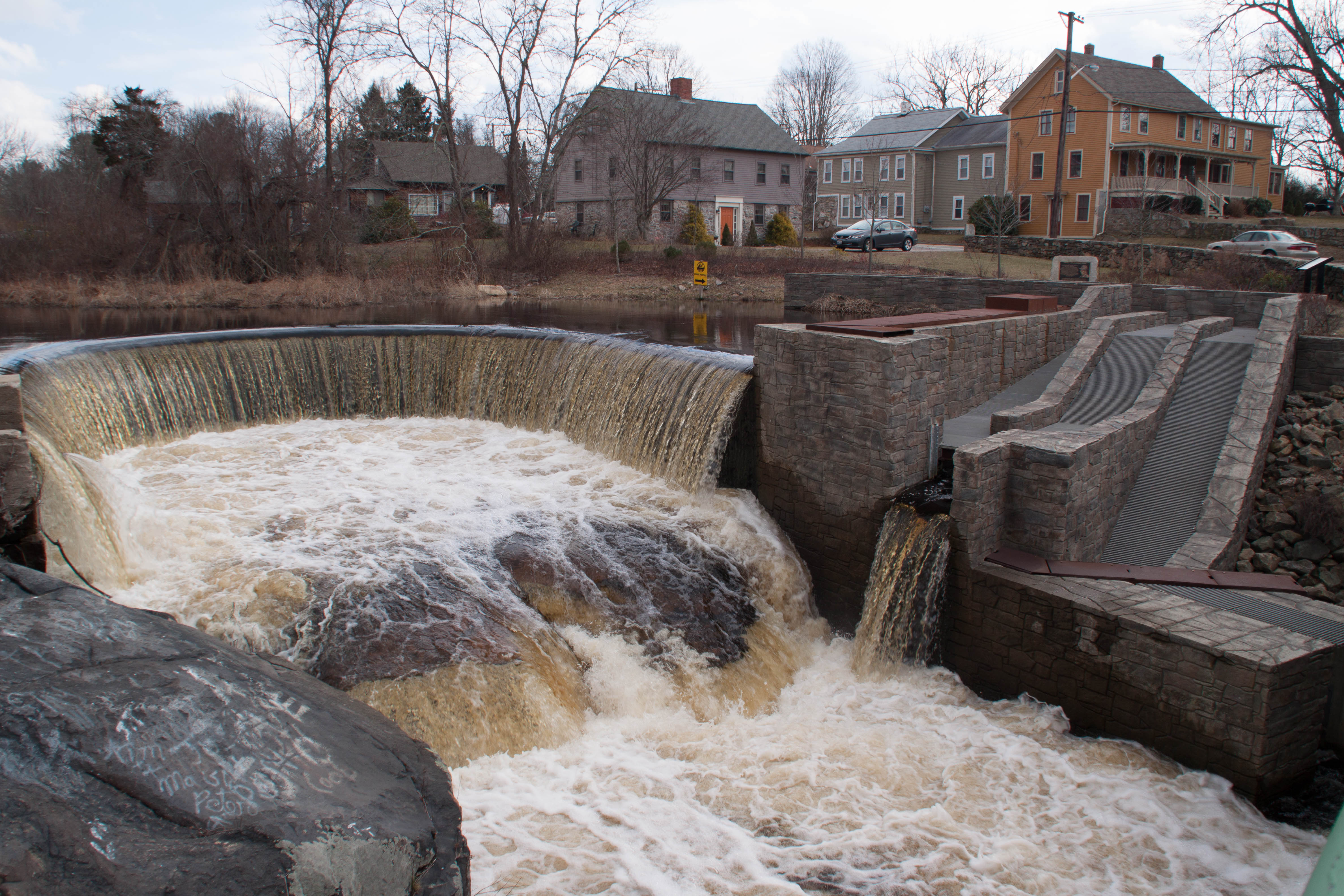
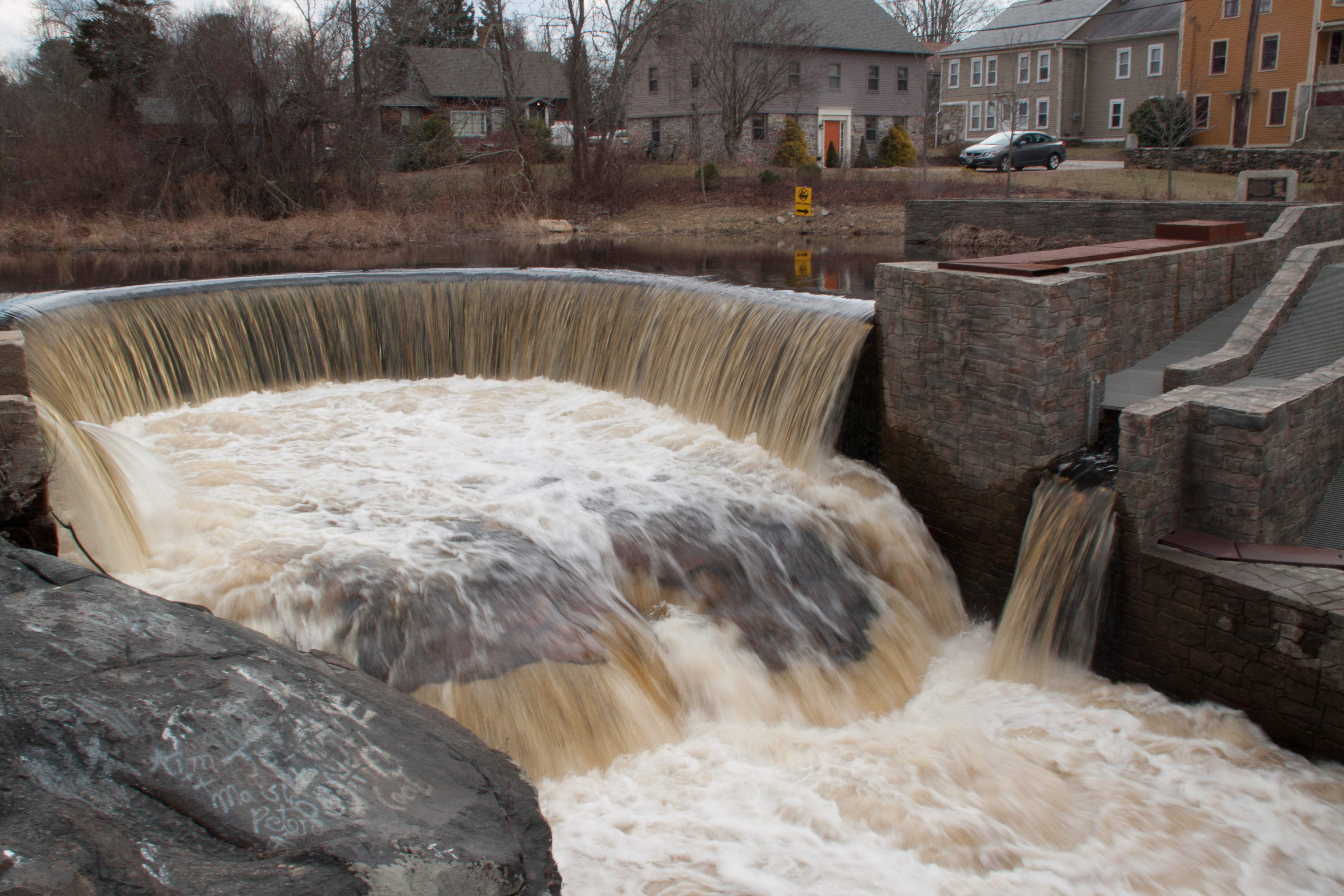
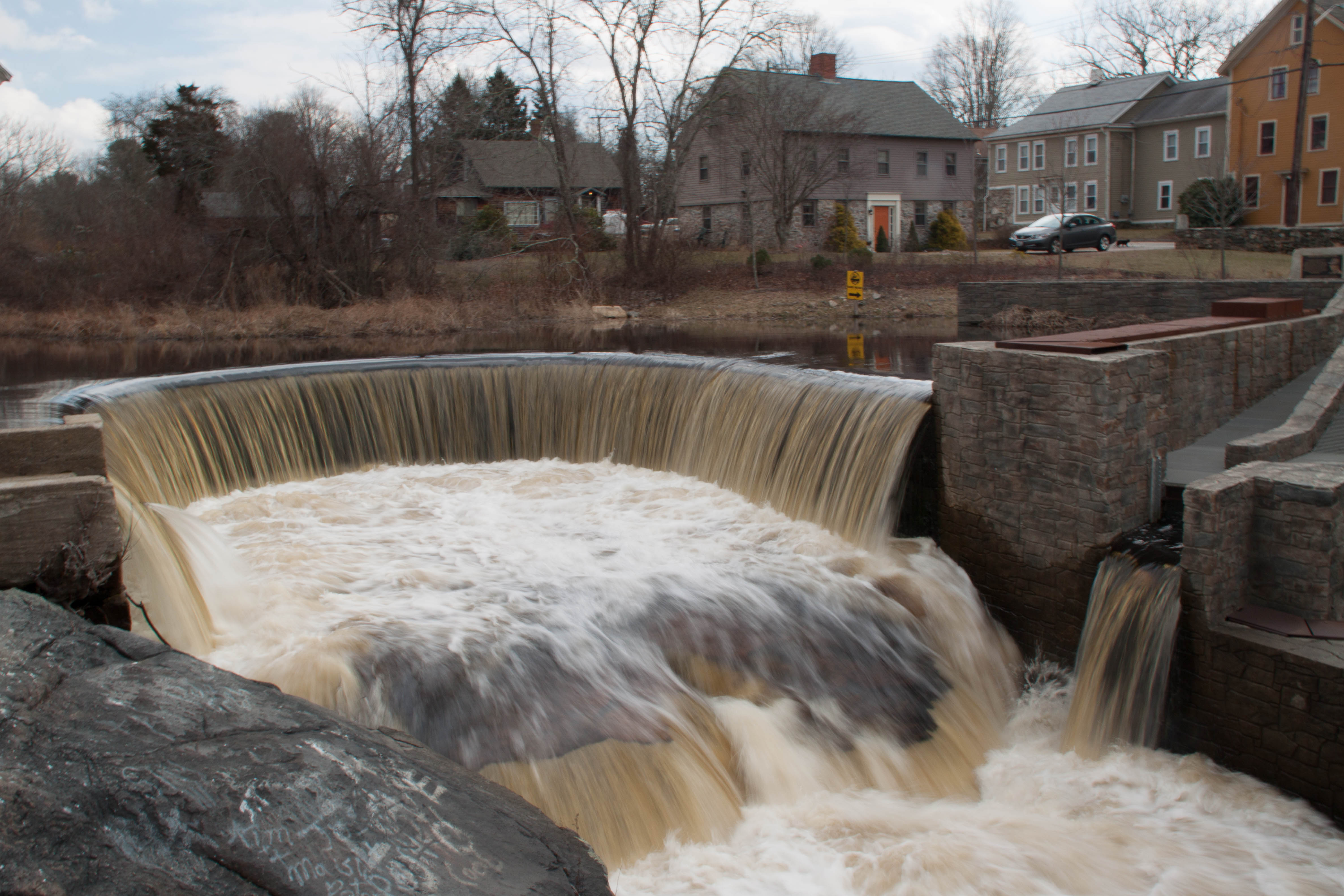
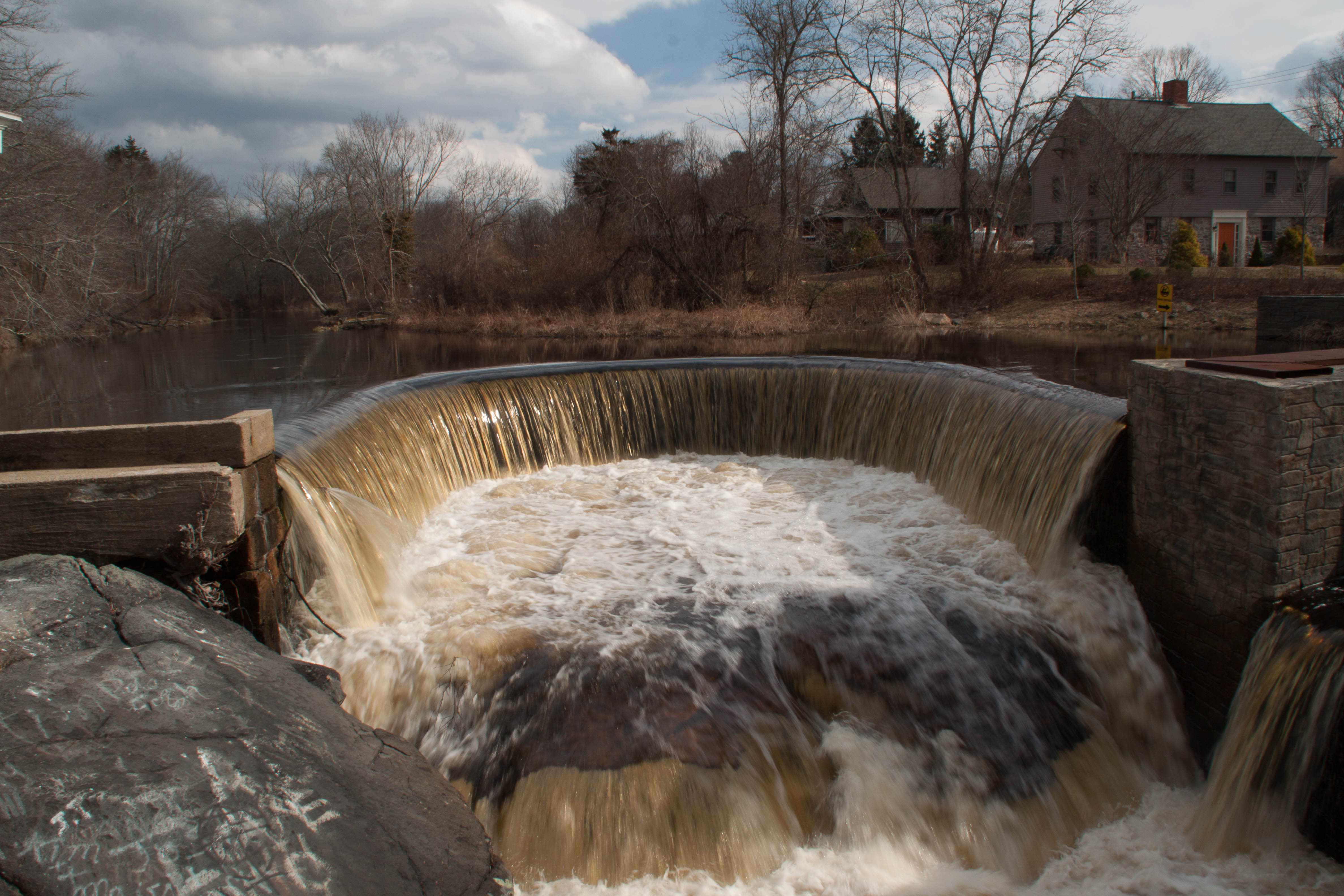
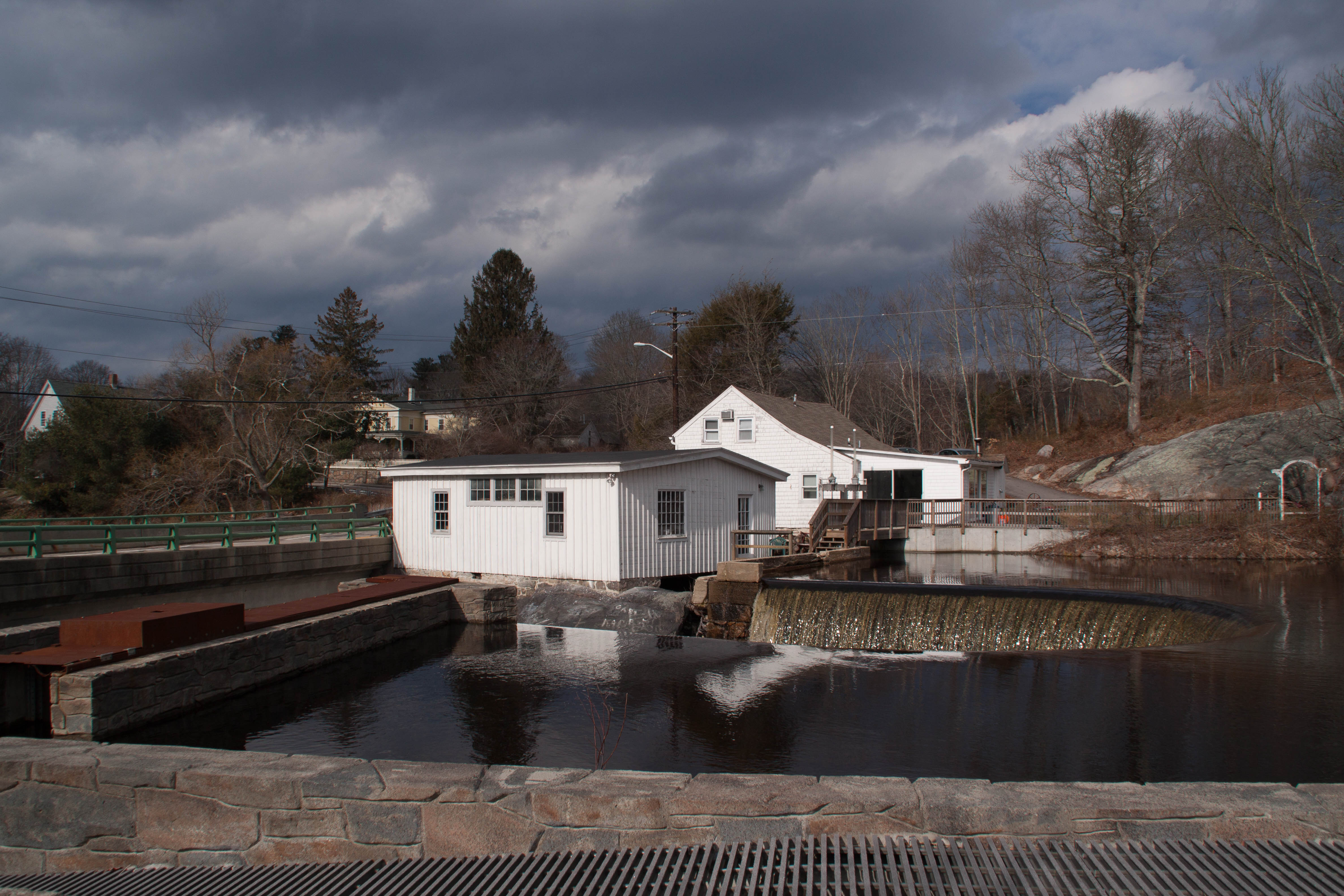
More playing with exposure times
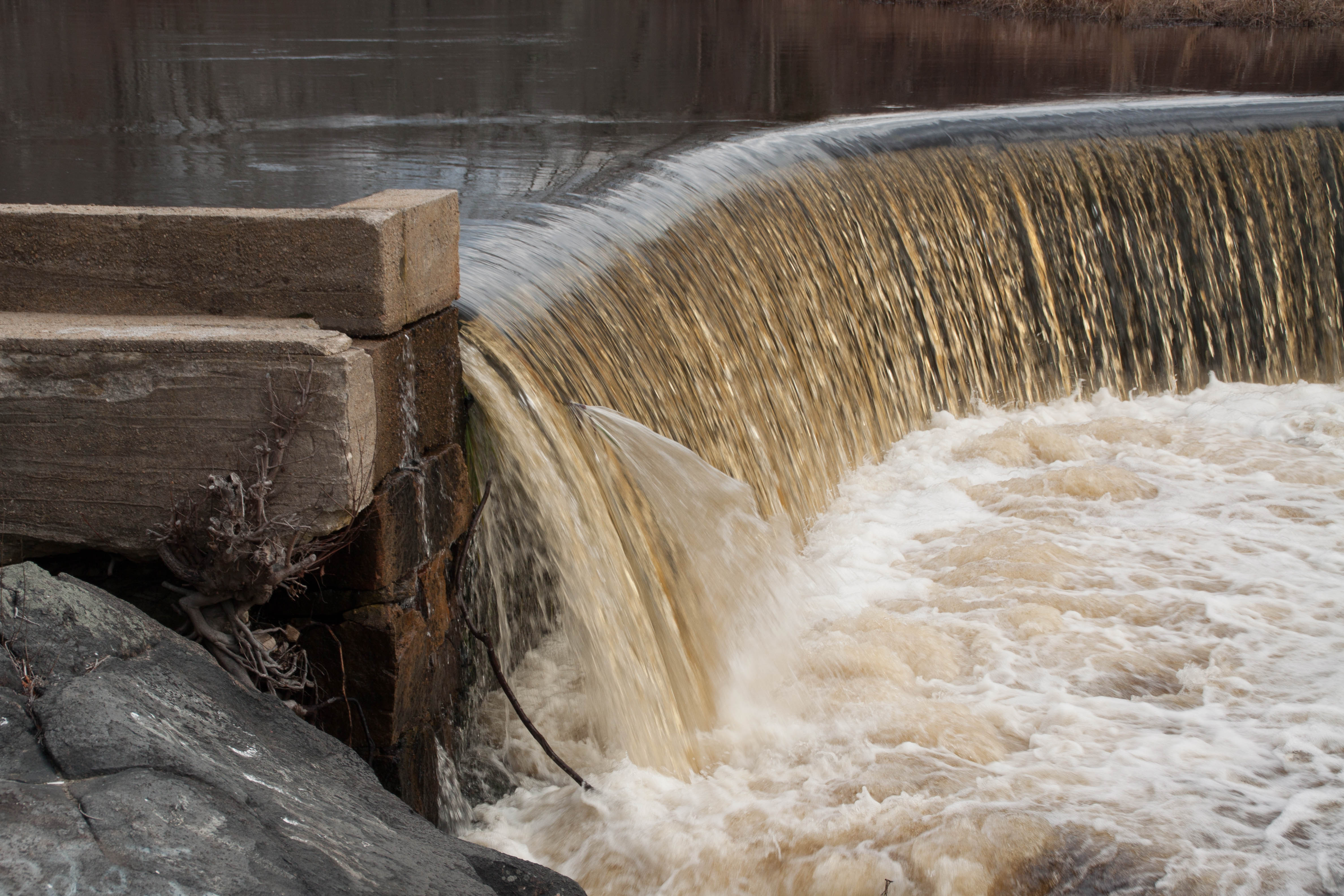
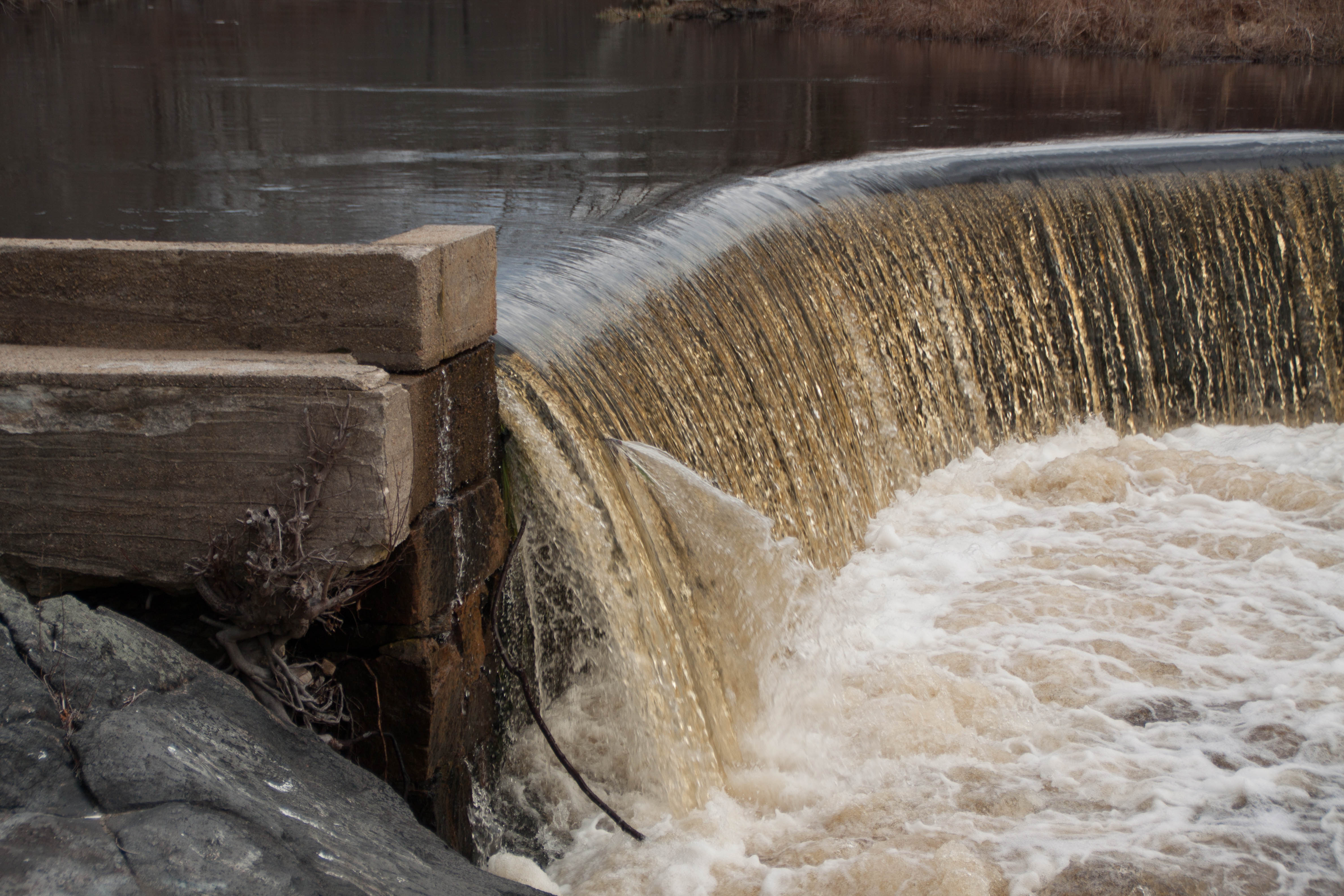
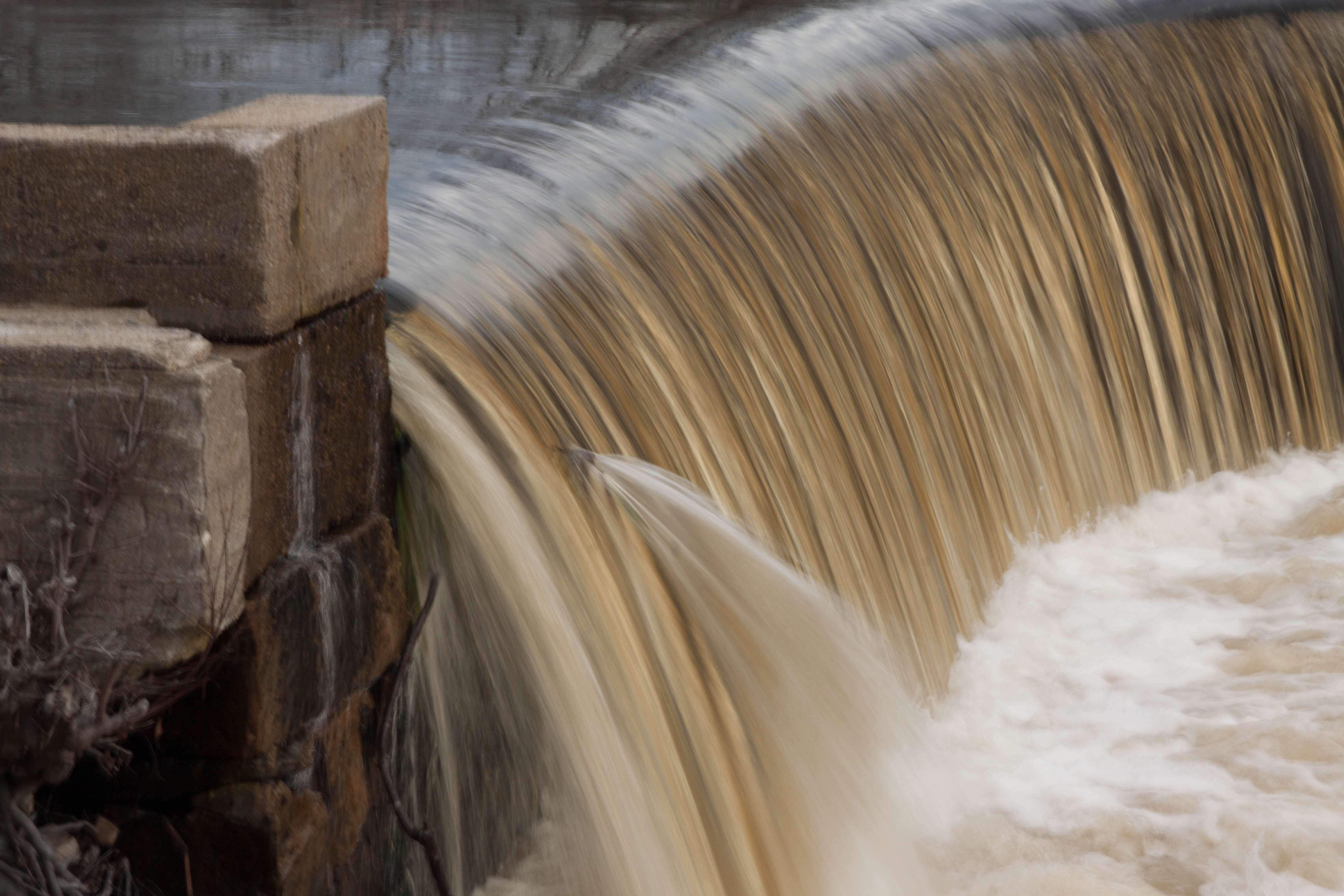
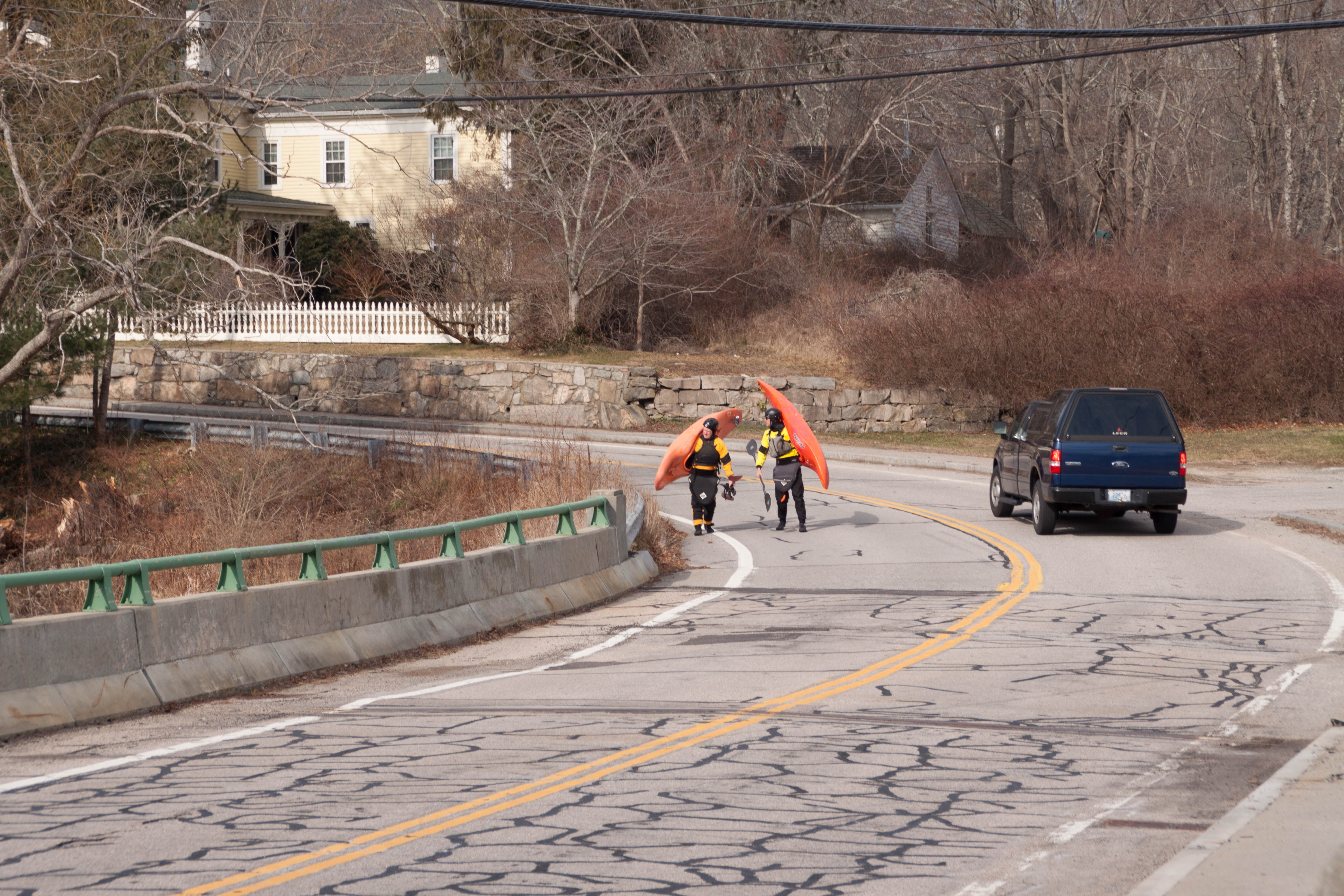
Sure is a mild January -- Kayakers! And leaving afterwards there was a pack of bicyclists heading into the village!
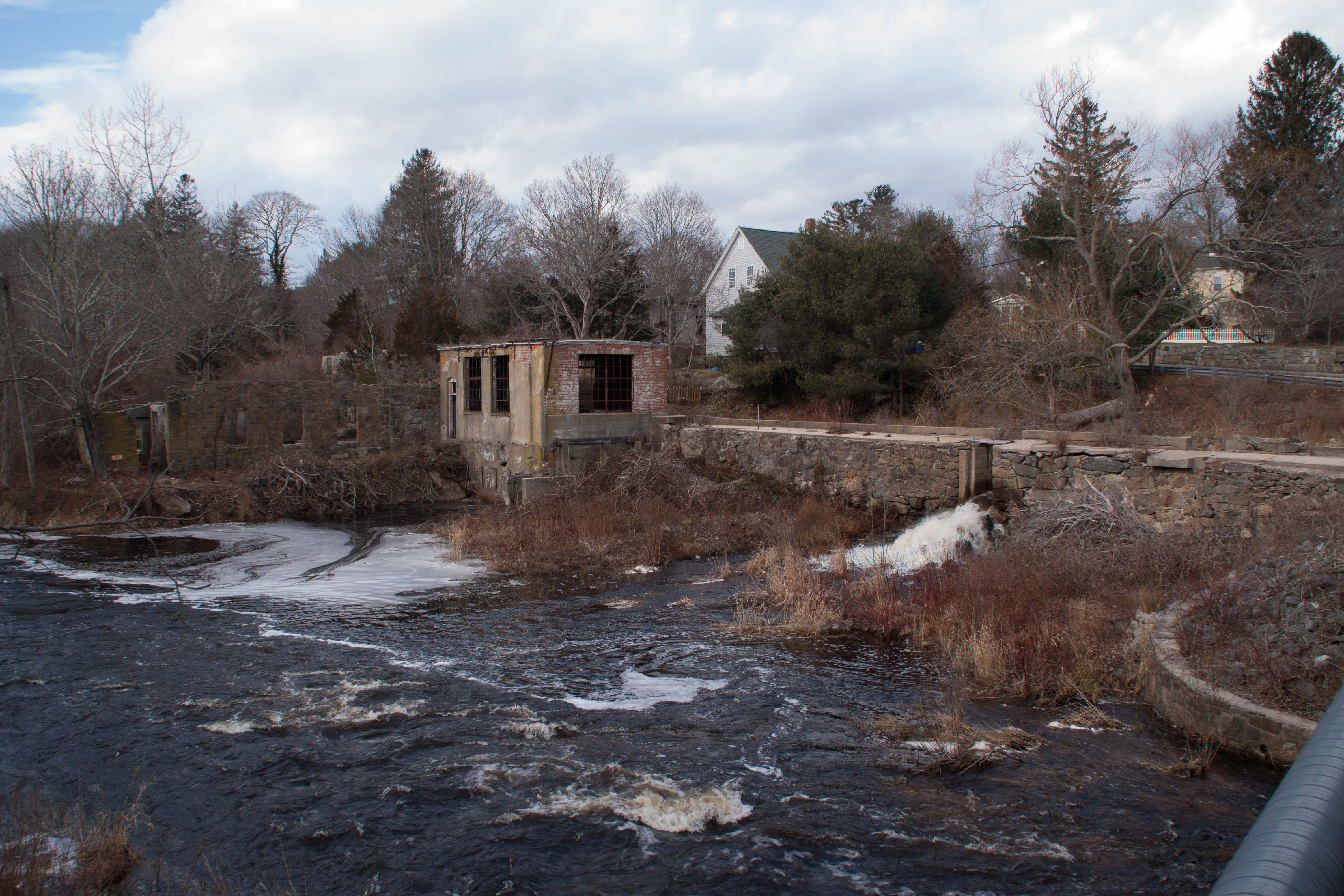
Over did it with LightRoom? I dunno, reminds me of some of the WWII era color photos I've seen!
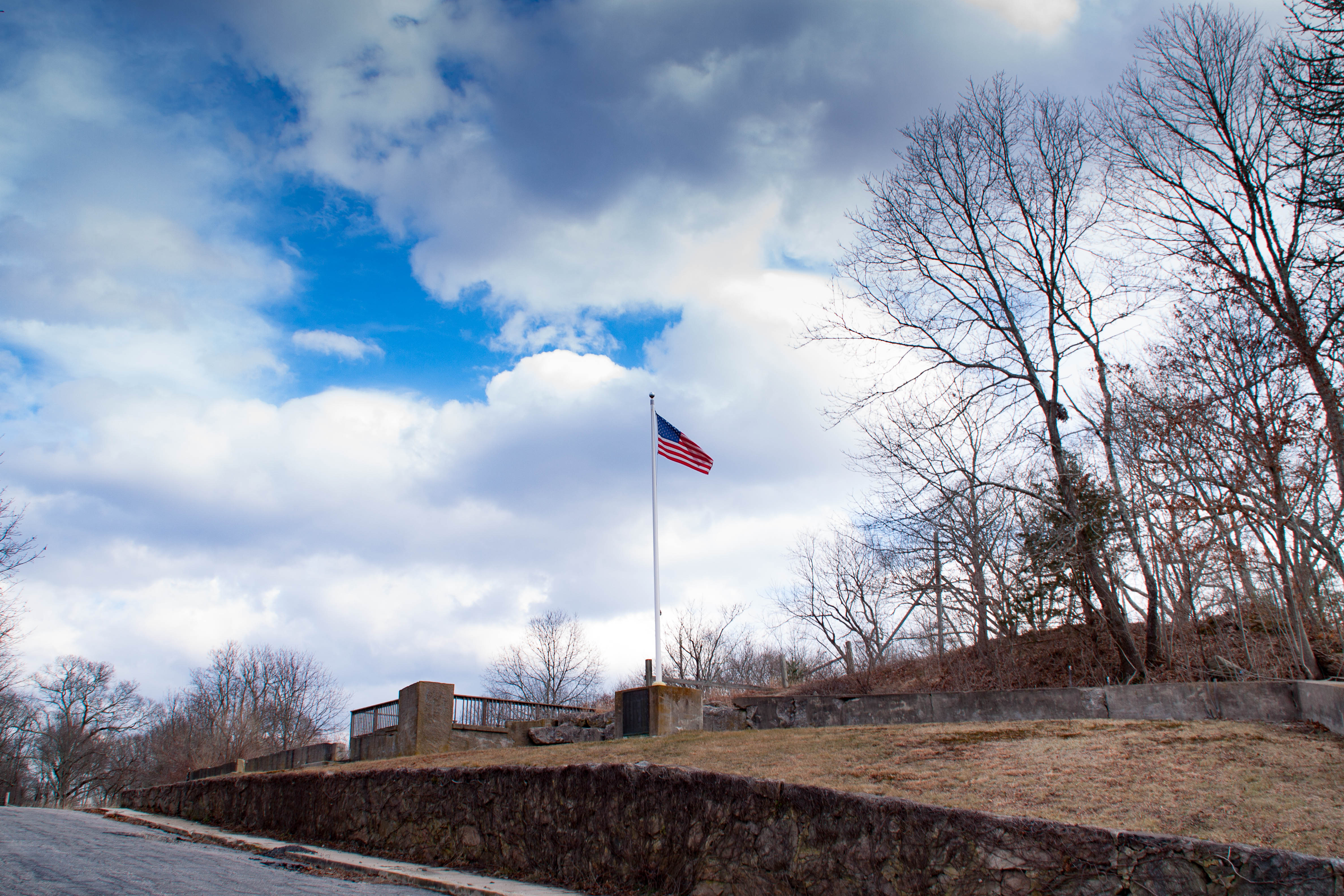
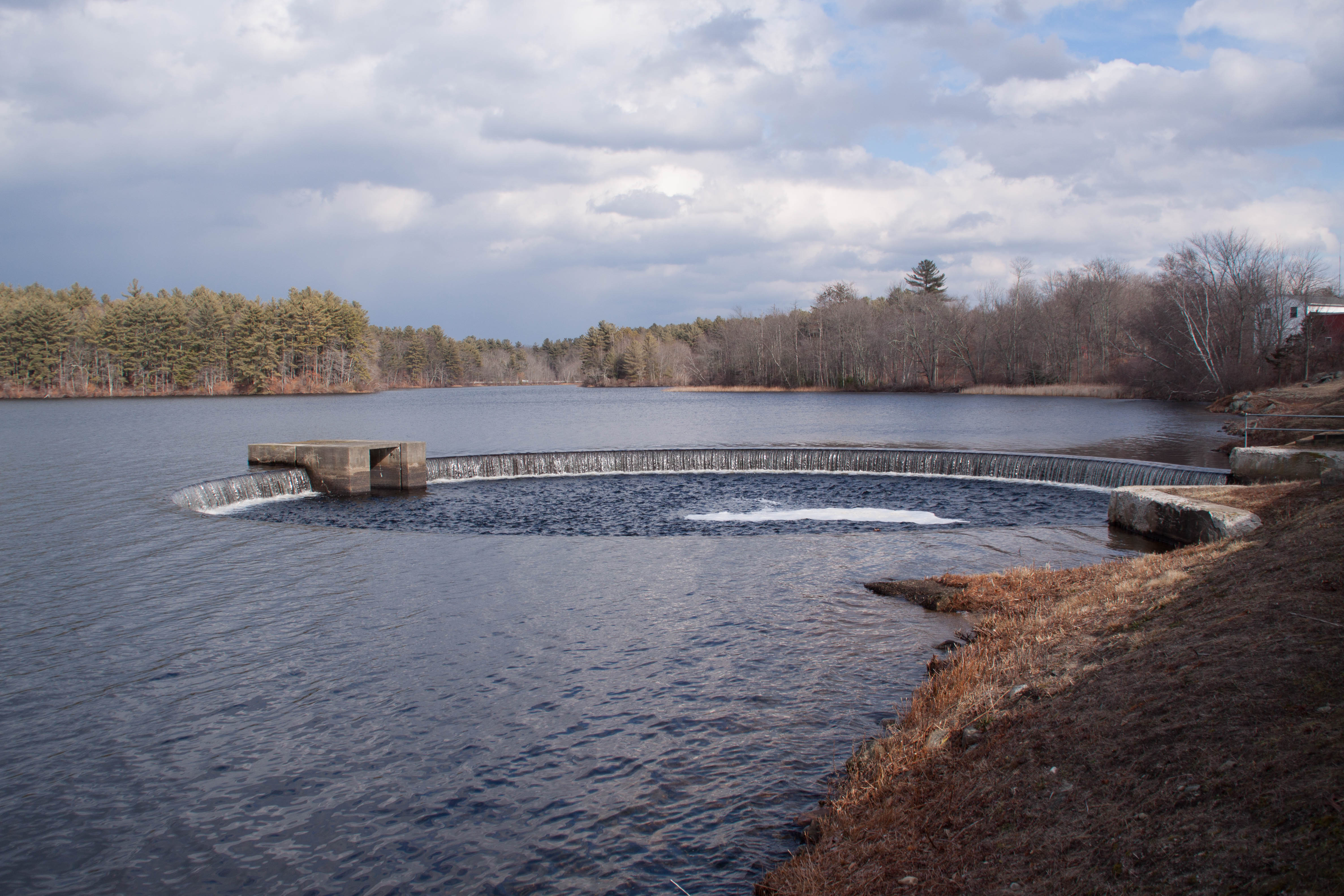
Another Horseshoe -- on Old Route 6 in North Scituate.
Most people probably think of it as the "Scituate Reservoir" but this dam north of the highway impounds the "Regulating Reservoir" -- it flows immediately into the actual Scituate Reservoir. It was completed before the Scituate Dam, and until the Scituate Reservoir went online it was used to supplement Providence's old pumping station so my guess is "regulating" referred to keeping a constant supply of water. Just my guess.
Then I remembered another Horseshoe built two centuries after the one in Hope Valley -- this time the spillway at the West Thompson flood control dam (well 3/5ths of a Horseshoe anyways):
Oh...and just remembered I took this of photos just to use LightRoom to create a Panorama from five individual shots:
Subscribe to:
Posts (Atom)